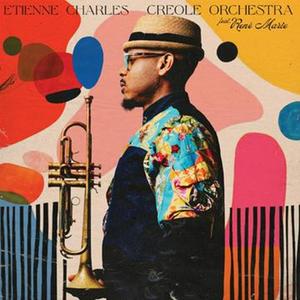
Etienne Charles is an accomplished trumpeter/composer/improviser/arranger with a rich cultural tradition that he shares though his years of performance, research and teaching. With his most recent release for his own Culture Shock imprint titled Creole Orchestra, Charles arranged and orchestrated 13 songs, wrote 3 originals and enlisted the virtuosity of nearly two dozen master musicians as he charts the origins of the big band sound.
As Charles’ tenth album as a leader, Creole Orchestra brilliantly explores the profound connection between jazz and the polyrhythmic sounds of the Caribbean and reveals the evolution of Charles’ big band writing. The recording also features key players from his band Creole Soul and includes songs from several different commissions and projects. Opening with his original titled “Old School” this song is flavored with powerful calypso rhythms that Charles has expanded for the orchestra. Soloists Brian Hogans, John Ellis, Dion Tucker, Sullivan Fortner are spotlighted along with Charles’ memorable trumpeting. “Holy City” another of Etienne’s originals, features Charles and soloists Seth Ebersole and Brian Hogans performing with an exciting contrast of flutes and bass clarinet at the head before the songs segues into lush woodwind solos and Charles’ inimitable brass voicings. “Douens,” a song also written by Etienne, is a Trinidadian folk song that references the lost soul of a child who wasn’t baptized or christened before death. The soloists bring out the melodic syncopation of calypso and soca music.
Overall, Creole Orchestra is a masterpiece and one that should be included in your big band music collection. Stay in touch with Etienne Charles’ happenings at http://www.etiennecharles.com
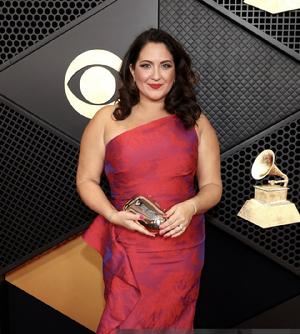
Photo courtesy of NARAS
And The Grammy Goes To…Nicole Zuraitis!
By Paula Edelstein
Nicole Zuraitis is a multiple GRAMMY-nominated Jazz singer/songwriter, pianist, arranger, and New York-based bandleader who won the coveted GRAMMY Award for Best Jazz Vocal Album at the 66th Annual Grammy Awards.
After surviving the emotionally complex and grown-up issues that permeated her career while making music in various genres to performing live on her poignant career-defining recording titled How Love Begins, today, Nicole has positioned herself as one of the top Jazz artists of her generation. She is no longer an “unheard” voice or minor jazz singer who is just maintaining her career as an educator and current vocal faculty at NYU, SUNY Purchase and the Litchfield Jazz Camp. She is also an ardent activist regarding conservation, animal rights and mental health issues and is definitely up for the challenges and rewards in a new career in the Jazz music landscape.
We caught up with Nicole as she prepared for concerts throughout the USA and Europe. Here’s what she had to say.
SOTJ: Good day Nicole, thank you so much for taking the time to speak to us about your amazing journey as a jazz vocalist, pianist, activist and now Grammy Award winner for Best Jazz Vocal Album at the 66th Annual Grammy Awards!
Your deserving vocal performances will be talked about for years but the technical mastery achieved as an independent recording label was equally important. Have you found the time for introspection even in the dizzying days after your first Grammy win?
Nicole: Ha! You know what's funny? I immediately went back to work after I won the Grammy and not even with my own band. You know I'm a working musician so I didn't know if I would win or lose. And I just know that I have commitments. So I went straight to Palm Desert and did a Shakespeare and Jazz children's educational Jazz outreach workshop. I went on tour with my band in California Georgia and Texas. And I would say that I still haven't had a single day off since I want to really understand the magnitude of what has happened. But that's very on brand for me…I'm a workhorse uh for good or for bad.
SOTJ: Well that's wonderful and maybe that has something to do with the Grammy appreciation you received. So congratulations! I hope there are many more in your future. I must say yours is one of the most incredible survival stories to date! Let’s look back at your remarkable journey to this moment in time. After being an independent artist for nearly 15 years you changed careers to become a full-time vocalist and songwriter singing in a variety of genres and venues and teaching. Along with the residency at the 55 Bar in Greenwich Village and the encouragement from Dan Pugach to fully engage your Jazz vocal interests you took that leap of faith. Were these catalysts among your true ‘ready, set, go’ moments?
Nicole: Well I think the reason why I did so many different types of music is one, exactly like you said, it was survival right. If you don't have a silver spoon or you're not if you don't come from wealth you know you have to just work in order to make ends meet. So if it involved music and they were offering me the opportunity to make music then I said yes. And because you know genre is just a label that we put on music often times so that we can we can box it in. But for me good music is good music. And so I loved doing all those other types of things because I was like wow I'm making music for a living. But when it came to being a jazz singer/songwriter that was a huge deal for me to accept that because I felt like I had many years…well let me back up. I felt like I needed to really put the work in and understand the importance of the tradition of jazz and I have to do transcriptions and immerse myself in the jazz culture and go to jam sessions and see my peers play and really take it all in on a deeper level so that's why I didn't call myself a jazz singer for so many years because I was like I need to immerse myself more into this before I can just decide that I'm jazz. Does that make sense? Jazz is a language and I was not speaking the language…I was babbling. I knew I had work to do in order to improve my jazz language. I wanted to make sure I was able to hang with the jazz cats. And so when I finally felt like I was getting a knack for it that's when I decided to really live in the jazz space. And that's when I went to Birdland again and I sat in and that's when Johnny Valenti was like ‘where in the hell have you been?’ And I was like, well I don't know … I wasn't sure if I was “jazz” enough before. He was like ‘you're singing with the big band starting next week.’ So I really had to make sure that I was able to hang with the tradition of Jazz and Black American music.
SOTJ: Well I am so happy that you finally made that commitment because your voice is just tremendous and the recording speaks volumes about your survival instincts. It has been written that an oil spill in Long Island Sound inspired you to write and arrange the 10 original songs for How Love Begins.
Nicole: I live on Long Island Sound but saw a photo of the oil spill in the Gulf of Mexico and thought it was so heartbreaking. I had always been walking along the estuary and that’s why I thought about doing something with SavetheSound.org. I would like to organize a sustainable jazz festival to maintain support for the issues we care about. In a micro sort of way and hopefully we can get the funding to support that.
SOTJ: Most of the time all any jazz vocalist needs (or for that matter all anyone needs) is to be sensitive to others and their creative energy. So having Christian McBride, the eight-time Grammy award winner, co-produce the album was absolutely extraordinary. Tell us how your collaboration with Christian McBride as the producer of How Love Begins came about.
Nicole: I met Christian six months after I did the Sarah Vaughn International Jazz competition while I was playing background at the Red Eye Grill across from Carnegie Hall. It was a really busy day at the restaurant and no one was listening. And so I was just kind of noodling around and then I look up and this guy goes, “I think I know you.” I was like, “Oh God I know you, that's for sure! You know me from the Sarah Vaughn International Jazz competition.” So we became fast friends and you know I'm so thankful to Christian because he encouraged me and he chose all original music for How Love Begins even though I gave him different arrangements. He also encouraged me to play the piano on the record and to do the record live like a jazz record. And so it was a really special thing to have such a kind and charismatic but also legendary musician lifting me up about the things that I was the most self-conscious about. It was really special and I'm really, really grateful.
SOTJ: The songs are deeply felt portraits of love, survival and togetherness and a reminder that recollections often fade but love endures. Can you share some of the emotional experiences that remain even though years have passed since you wrote the songs?
Nicole: That's so interesting. I think that you know it has been years since I wrote them and in retrospect I would love to record them again because they have grown so much since we've been touring with these songs for the last two years. But the sentiment that remains is that you know the album is in two parts - how love begins and how love ends. And I think the over-arching thing that happens at the end is that it's also how it begins again. A lot of people in my life who I love and cherish will have loved and also lost…but never loved again. And so that whole sentiment of hope and that love is cyclical is kind of what I am still taking out of the music especially as someone who often was feeling kind of hopeless as an independent artist just banging up against the ceiling.
SOTJ: Your band really worked it and made the entire recording shine. There’s Christian McBride, Gilad Hekselman, Maya Kronfeld, Dan Pugach, Billy Kilson, David Cook, wow! Was there one performance with them that had a major impact on you other than the actual live recording sessions?
Nicole: One of the biggest moments for me was when I was playing piano on “Reverie” when Christian, Billy and Gilad were performing live in the studio for an arrangement of a tune of mine. What a complete moment to be proud of. I’m playing with these monsters of jazz!! I can finally say I am proud of myself.
SOTJ: You certainly pulled a lot of heartstrings based on the album’s reach and the positive response from members of the Recording Academy who voted How Love Begins as the Best Jazz Vocal Album. Do you think the Best Jazz Vocal Album category is better protected as a Grammy category since more voters seem to be focusing on how Jazz vocalists are such a strong part of music’s history?
Nicole: That’s very interesting. I think there has been this incredible movement in music…women dominating the Grammys, Black American Music shaping all American music, etc. I have gotten a lot of feedback about coming back to Jazz, because the Great American Songbook is being rewritten by living jazz songwriters and that's very exciting. I'm curating a brand new songbook, the real vocal, I mean the new vocal songbook full of living jazz singers and songwriters right now. I have about 100 submissions to the book and I just hope that it's a way for people to find music written by people who are living right now. I would love if people sing my songs and I would love to sing someone else's songs who’s living. That's the way that we can support each other and lift each other up as a community. So I'm really passionate about that.
For Glimmering Path, Luis Muñoz wrote, arranged and orchestrated all seven songs on this magnificent recording. In addition to those talents, Muñoz plays drums, piano, synthesizers, all percussion, bass, cymbals, and collaborated with Lois Mahalia on vocals, Randy Tico on fretless and electric basses, Daniel Zimmerman on electric guitar, Jonathan Dane on trumpet, plus many more wonderful artists.
As the composer, producer, arranger and performer on Glimmering Path, the music Luis Muñoz has written and arranged reflects on his evolution as a musician and person. The songs reveal Muñoz’s diverse jazz interests as illustrated in “En el Jardin de la Plenitud” which is the beautiful opening song that sets the mood of Glimmering Path. Tom Buckner’s warm inviting soprano saxophone tones have a harmonic understanding and a sublime sense of melody that he shares with Luis on acoustic piano and the “glimmering” synthesizers and percussion.
Muñoz’s treatment of the ballad “Crescent Moon” sung by guest vocalist Lois Mahalia with unhurried beauty, is moving and very comforting. Daniel Zimmerman adds his musical vision to the song with excellent comps on the electric guitar. For the ballad “My Love” Lois Mahalia’s exquisite, soulful and passionate vocals are enhanced by Muñoz who plays drums, piano, Rhodes electric piano and synthesizers alongside Jonathan Dane on muted trumpet/flugelhorn, and Randy Tico’s electric bass logic. This song is one of the most beautiful love songs that Luis has shared from his repertoire.
“August” is a high-level celebration of Jonathan Dane’s artistry on muted trumpet encompassed by Daniel Zimmerman’s memorable electric guitar solo as Luis and Randy hold down the rhythm logic, while “The Three Seasons” spotlights Muñoz’s expertise on the piano, drums and synths as Randy and Daniel take the lead. This up-tempo gem is a sure indication of the versatility of the musicians who interplay like a family reunion.
For “River of Love” Lois Mahalia returns on lead and background vocals, Jim Calire makes an appearance on the Hammond B3 organ, Bill Flores plays pedal steel guitar, Brendan Statom plays acoustic bass and Shawn Thies shares the backing vocals. This song has a country music flavor whose theme/message – ‘Man’s self-inflicted scar’ - seemed to me painfully relevant to events in today’s headlines. This same message is apparent in “Lords of War” during which the musicians express their anguish about a war-torn and destructive time in human history. The song is a raw critique of the military industrial complex and of the war mongers who profit from it. The heart drenching vocal performance by Lois Mahalia is so believable that after listening to this song, let us, dear listeners, look ahead with hope and commit ourselves to a new and more peaceful century.
Luis Muñoz has consistently received global success with previous releases and Glimmering Path is certainly illustrative of his life, career, and the musical friends he has performed with and kept. They are surely among the muses that continue to shape and inspire who he is and why his music for Glimmering Path is so brilliant and appreciated globally.
CRY ME A RIVER
Hilario Duran
Hilario Durán and his Latin Jazz Big Band presents Cry Me A River. The celebrated Cuban-Canadian composer and piano-master leads his 19-piece ensemble featuring special guests Paquito D’Rivera and Horacio “El Negro” Hernandez in a stellar Big Band recording – his first in 17 Years.
The nine works on this recording are born of Durán’s Afro-Caribbean cultural topography but are also informed by his gifts for bending tradition and infusing his arrangements with unfettered improvisation. Durán integrates a myriad of genres into his singular style on the album – traversing innovations that have made his music uniquely breathtaking. He points to “Claudia,” a song he arranged and features Paquito D’Rivera on alto saxophone, as Dizzy Gillespie’s “Night in Tunisia.” “Fantasia Impromptu” is a kind of Jazz-meets Classical, via Brazil and Cuba, featuring D’Rivera on clarinet. “It is our way of honoring the classics – in this case, Chopin,” Durán says.
On the title song “Cry Me A River” vocalist/violinist Elizabeth Rodríguez delivers new sensitivity to the lyrics and plays deep in the Cuban tradition with an incredible improvisation! “’Pacá por Juanito” is a tribute to guitarist, composer, arranger Juanito Márquez. Another original is “Mambo y Tumbao.” Duran highlights both traditional forms (mambo) and the revolutionary innovators of Cuban music – the great Bebo Valdés, who invented the batanga rhythm, and the influential bandleader Pérez Prado. “I Remember Mingus” is a tribute to Charles Mingus, the great composer, bassist, and bandleader.
Overall, Cry Me A River is a MIGHTY offering from Hilario Duran and his Latin Jazz Big Band. Produced by Peter Cardinall, arranged by Hilario Duran and released on Alma Records, this is a true masterpiece that should be in your collection of Latin Jazz Big Band recordings. Keep in touch at www.almarecords.com
IDENTITY
Ross Pedersen
Drummer/Producer Ross Pederson delves into Jazz, Rock, Pop and Hip-Hop on his debut as a leader. Titled Identity, features saxophonist Donny McCaslin, keyboardists David Cook on piano, Wurlitzer, Rhodes, synths and Hammond B-3, and Julian “J3PO” Pollack on piano, Rhodes, B-3, synths, and bassist Sam Minaie. “This is me,” Pederson says. “It’s a sensibility of one foot in the jazz world and one foot in pop. I drum, program, and added in layers of synths and percussion during the Identity production.”
Identity opens with “Anxiety,” a whirlwind, beat-grating drive with melodic interludes amidst other-worldly haunting electronics. McCaslin delivers blustery excursions and outstanding harmonies that are signature to his rock-meets jazz intuition. “Now,” is a positive, uplifting tune where McCaslin plays mightily through an arpeggio cloud of electronica that Pollack adds into the mix. By contrast, “Strange Things” features McCaslin’s blowing and a sci-fi groove inspired by the Netflix series Stranger Things, while “Hope Uplift” is a dreamy, melodic, cosmic salute to overcoming tension, hate and division.
Overall, Identity reflects Pedersen’s exemplary musical examination of our shared humanity, i.e. anxiety, strange things, hope uplifting, etc., in an epic and unforgettable musical portrait. Give it a listen and then add it to your collection.
STRACCI
Michael Ragonese
On Stracci, pianist, composer, and arranger Michael Ragonese pays tribute to his heritage with six original tracks and two jazz standards performed in a trio setting. Stracci is the sophomore outing for Ragonese and follows his 2019 debut as a leader titled Day to Day. STRACCI highlights Ragonese’s inventive piano playing and compositions in a trio format comprised by two outstanding musicians, Mark Ferber on drums, and Luca Alemanno on bass. In addition to performing on piano, Michael produced, arranged and co-wrote six original compositions for the album. Two covers – “Solar” and “I’ll Be Seeing You,” round out the set list.
The recording opens with “Solar” a composition written by Chuck Wayne and later recorded and copyrighted with small alterations by Miles Davis. Although "Solar" is considered a blues by most listeners, the tune’s angularity, counterpoint, and early modalism all come together in a modern jazz spin much like the version recorded by pianist Bill Evans. “Escape begins with a classical intro and ends with a chord vamp featuring a high energy solo by Ferber. The symbiotic interplay between the trio members is truly remarkable. The suite titled “Tides of Tomorrow Part 1 and Part 2” features Ragonese playing ostinato in his left hand and the melody in his right hand on Part 1 which is in ¾ tempo. Part 2 is in 4/4. Both parts have a dark hue.
Overall, all eight songs included in Stracci reveal Michael’s extraordinary musical growth as a composer, arranger, performer, producer and band leader. The recording is a fascinating and inventive listen that you are sure to enjoy. Check it out and then add it to your collection of great jazz trios.
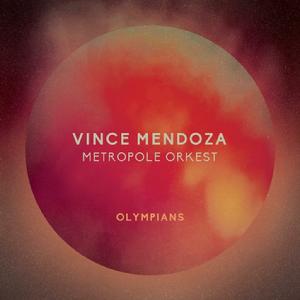
Olympians
Vince Mendoza
Metropole Orkest
Vince Mendoza reunites with longtime collaborator Metropole Orkest on Olympians. The seven-time Grammy Award-winner offers a select collection of his works written for the orchestra over their 28-year collaboration. The album follows 2021’s Freedom Over Everything, his Grammy-winning debut for BMG’s Modern Recordings.
Ever the master arranger and orchestrator, Mendoza deftly explores the language of jazz, classical music, flamenco and samba, rock, and R&B and film music among others, from the vast palette of idiomatic colors he chooses for each of his compositions. To achieve that vision Mendoza requires musicians who are willing to take that journey with him. Therefore, Olympians featuressuch stellar award-winning guests as Dianne Reeves, Cécile McLorin Salvant, Chris Potter, David Binney, Alex Acuña and Ramon Stagnaro.
“Quixote,” the opening track on Olympians, finds Mendoza joining a long list of composers inspired by Cervantes’ epic novel that stretches from Richard Strauss to Brian Eno. The piece showcases the composer’s flair for expressing the full range of the ensemble’s dynamics from the most solemn percussion to the transition and interplay between the lead soprano saxophone and the orchestra’s thematic variations. Mendoza gives “Partido Alto” a fresh and grooving treatment on Olympians complete with a rousing “samba school” brass anthem at the end. Mendoza’s new Olympians orchestration of “Esperanto” is a long build, taking full advantage of Dianne Reeves’ soaring multi-octave voice and vocalese, lending considerable authority to Kurt Elling’s lyrics. Mendoza recruited Cécile McLorin Salvant for a brand-new orchestration of “House of Reflections,” a 1992 Mendoza composition with lyrics by the brilliant poet, lyricist, and British jazz vocalist Norma Winstone. The role of the saxophonists represented on this recording is a veritable woodwind showcase – from guest altoist David Binney’s fire breathing solo on “Lake Fire” and Chris Potter’s articulate tenor on “Barcelona” to Metropole Orkest’s own Marc Scholten on soprano and alto on “Quixote” and “Miracle Child.”
Vince Mendoza can look forward to an eighth Grammy nom and win due to the masterful performance by the Metropole Orkest and the special guests of these excellent songs composed and conducted by the Great Mendoza! Olympians is available March 3 on BMG’s Modern Recordings Imprint. For more information on the Vince Mendoza, visit: www.vincemendoza.net. For more information on Metropole Orkest, visit: www.mo.nl.
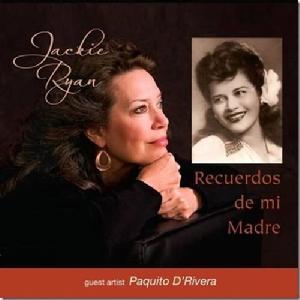
Recuerdos de mi Madre
Jackie Ryan
Recuerdos de mi Madre, is Jackie Ryan’s musical tribute to her mother via interpretations of songs written by such Spanish composers as Alvaro Carillo, Augustin Lara, Osvalso Farres, and others. The award-winning vocalist sings ten of Latin America’s most cherished love songs in Spanish and is accompanied by a coterie of respected musicians and arrangers. Marco Diaz arranged nine of the ten songs that Ms. Ryan beautifully and sensitively interprets while also working as Musical Director, co-producer and pianist on his broad spectrum of arrangements. Fourteen time Grammy award winner and special guest Paquito D’Rivera performs on three songs – “El Dia Que Me Quieras,””Perfidia” and “Quizas, Quizas, Quizas.”
The recording has authenticity and reflects Jackie Ryan’s and her coterie of musicians’ vast experience and freedom of expression. Listeners will feel the similar joy and warmth Ryan must have felt while listening to her mother sing. Overall, this recording is an extraordinary cross-culture of jazz, Latin and popular music that features Ryan’s gorgeous vocals and personal insights as a musician and interpreter. Released by OpenArt Productions LLC and Jacqueline Ryan, the CD also includes a 20-page booklet of credits and liner notes in Spanish and English.
Kris Bowers
Brian Blade, Brad Meldau, Joshua Redman,and Christian McBrid
Gerald Clayton
Christian Sands
Revered Jazz innovators and today’s Young Lions to perform at MJF65 Sept. 23-25, 2022
By Paula Edelstein
Revered Jazz innovators such as Wynton Marsalis,Terence Blanchard, Joshua Redman, the late Roy Hargrove, and Christian McBride were known as the Young Lions in the Eighties and Nineties. Their names are still synonymous with great jazz innovations and they are often cited as inspiration for many of today’s Young Lions including Kris Bowers, Christian Sands, and Gerald Clayton.
This year, artists from each of the Young Lions’ movements will perform at the 65th Monterey Jazz Festival September 23-25, 2022 at the Monterey Fairgrounds in Monterey, California.
Two of the most revered Young Lions of the Eighties and current Jazz innovators reunite as the Moodswing Reunion. Saxophonist Joshua Redman and bassist Christian MCBride join Brad Mehldau and Brian Blade to perform on the Jimmy Lyons stage Saturday, 9/24/22. Joshua and Christian are both award-winning leaders of their respective ensembles, and now these two giants are back together to perform at MJF 65. Be there!
Emmy Award-winning composer and pianist, Kris Bowers, creates genre-defying music that pays homage to his jazz roots with inflections of alternative and R&B influences. Kris was trained at Juilliard (as was Wynton Marsalis) and has excelled at composing for both film and television. For MJF 65, Bowers was commissioned to create and present “Ásylo” which celebrates the 30-Year anniversary of the Monterey Bay National Marine Sanctuary. Don't miss this exceptional commission Sunday, September 25, 2022 on the Jimmy Lyons stage.
The Gerald Clayton Trio will perform Sunday September 25th. The four-time GRAMMY-nominated pianist/composer’s music is a celebration of the inherent differences in musical perspectives that promote true artistic synergy. Gerald performed with the late, great, trumpeter Roy Hargrove not long before Hargrove’s death. In addition to performing with his trio, Gerald Clayton will direct The Next Generation Jazz Orchestra featuring special guest Christian Sands.
The 2022 Monterey Jazz Festival Artist-in-Residence is the two-time Grammy-nominated pianist Christian Sands. Christian began a six-year association with bassist Christian McBride in 2009, touring jazz festivals and clubs worldwide and is now one of today’s most in demand pianists. His most recent educational endeavor for the Monterey Jazz Festival as Artist-in-Residence is the online series of interviews with musicians, Welcome to the Sands Box, available on YouTube.
For more information about the MJF65, please visit the website at htttp://www.montereyjazzfestival.org.
Together We Can
Crystal Lewis
GRAMMY®-nominated artist Crystal Lewis’ new jazz vocal album titled Together We Can is a full-length collection of vocal jazz duets which features such GRAMMY® Award winners as Tori Kelly, Kate Flannery, legendary jazz trumpeter Arturo Sandoval, Charles Jones, Nikki Leonti, Ty Herndon, and several others.
Together We Can follows on the heels of Crystal’s previous jazz vocal album, Rhapsody and is one of her most empowering and dynamic musical events yet. It’s a collection featuring vocal duets, ensemble originals and re-imaginings that showcase and celebrate the joys of collaboration, friendship, and creative camaraderie, as the world collectively emerges from a time full of profound and dispiriting isolation.
Produced by renowned jazz trumpeter and arranger Tony Guerrero, the recording showcases many of the songs Lewis and Guerrero co-wrote. “Can’t Help It” featuring Charles Jones opens the set. This duet gives you ample reason to keep listening since their voices have an open and effortless quality. “Take The Chance” featuring Nikki Leonti is a soulful ballad that showcases Lewis’ versatility as a vocalist who can make an artistic statement with a musician of equal stature. Arturo Sandoval takes a very memorable solo on the lovely ballad titled “If We Ever Meet Again.” His muted trumpeting is truly nocturnal and adds another dimension to the song.
Overall, Together We Can is a cut above Rhapsody. Check it out and then add it to your collection of favorite jazz vocalists.
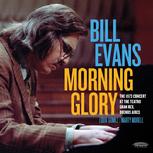
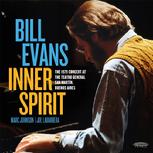
Morning Glory and Inner Spirit Available on Resonance Records
Resonance Records releases two of Bill Evans' brilliant concerts in Buenos Aires as Limited Edition LPs, CDs and Digital downloads. The recordings are the first official releases of Morning Glory, a 1973 concert with Eddie Gomez and Marty Morell, and Inner Spirit, a 1979 concert with Marc Johnson and Joe LaBarbera.
Deluxe booklets with rare photos from the concerts, interviews with the musicians, overviews by authors Marc Myers and Claudio Parisi, and observations by pianists Richie Beirach and Enrico Pieranunzi are available to heighten your listening experiences.
Morning Glory is a double disc live recording of the June 24, 1973 concert at the Teatro Gran Rex in Buenos Aires, Argentina. Produced by Zev Feldman, pianist Bill Evans is joined by Eddie Gomez on bass and Marty Morell on drums. Thirteen songs make up the session including “Emily,” “What Are You Doing the Rest of Your Life,” “Waltz for Debby” and “My Foolish Heart.” The concert was highlighted by a surprise performance of a bolero, “Esta tarde vi llover,” by the noted Latin American composer Armando Manzanero and was a triumph for Evans, as one can tell from the audible evidence on the recordings that includes 3 encores!
Inner Spirit is an excellent live recording of the September 27, 1979 concert at the Teatro General San Martin in Bueno Aires. It represents one of the first trio recordings by Evans’ last great band, with bassist Marc Johnson and drummer Joe LaBarbera, both veterans of Woody Herman’s band. Their work behind the pianist featured in a series of remarkable, intense live recordings captured before the master pianist’s death in September 1980. It also proved to be his final appearance in the country.
According to Joe LaBarbera, there was tension with the military presence in Buenos Aires, but people on the streets and the musicians we met were still joyous and excited to hear Bill. The musicians responded with an ecstatic and engaged performance of 13 songs. Evans brought a Latin touch to his concert repertoire, with the addition of “Minha,” a composition by Brazilian composer Francis Hime. He also played “Letter to Evan,” a new piece played solo and dedicated to his son, and “Theme From M*A*S*H.” The rarified climax of the concert came in Miles Davis’ “Nardis”; the great showpiece of the pianist’s last gigs, it stretched to a length of 17 minutes in Buenos Aires, sporting a nearly eight-minute solo introduction and inspired solos by all the group’s members.
These historical concerts are truly indicative of the expert performances of two of Bill Evans’ great trios and their remarkable grace under pressure. Consider taking a moment to give both recordings a deep listen and relax to the virtuosity of Bill Evans’ trios and the music they are making.
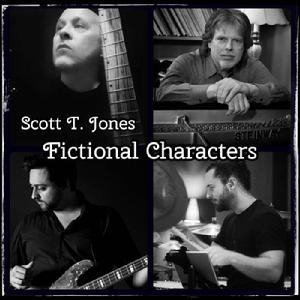
Fictional Characters
Scott T. Jones
St. Louis guitarist/composer Scott T. Jones has recorded a masterful recording of jazz-fusion guitar compositions for his Autumn Hill Records debut. Titled Fictional Characters, the recording features keyboardist Steve Hunt, bassist Romain Labaye and drummer Archibald Ligonniere.
The eight compositions, all written by Scott, are technically diverse and sonically riveting. Titles such as “Floki’s Shipyard,” “The Long Night,” and “Human Music” all speak to Scott’s virtuosic skills as a songwriter and guitarist in a way not heard for some time from jazz-fusion guitarists.
Fictional Characters is also, in part, a tribute to Scott’s ability to maintain hope in the face of struggles with nerve issues in his hands. As a result, the eight intricate and blistering fusion compositions are a true testament to his virtuosity, endurance and sensibilities. Check it out.
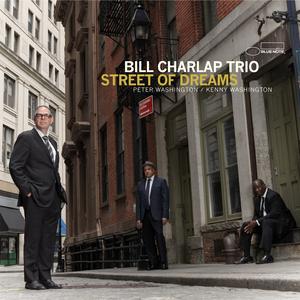
Street of Dreams
Bill Charlap Trio
GRAMMY Award winning pianist Bill Charlap returns to Blue Note with a sublime new album featuring his sterling trio with bassist Peter Washington & drummer Kenny Washington. The stunning new set presents Great American Songbook standards alongside songs by great jazz composers including Billy Strayhorn, Duke Ellington, Dave Brubeck, and Kenny Burrell.
The trio formed in 1997 and began recording a series of sterling albums for Blue Note in 2000 that firmly established them as one of the leading groups in jazz, including Written In The Stars, Stardust, Somewhere: The Songs of Leonard Bernstein, and Live at the Village Vanguard.
Street of Dreams is also a reflection of the literal and metaphorical road traveled together by Charlap and the Washingtons during the nearly 25 years since the trio formed in 1997. During that time, they’ve become so deeply attuned that on Street of Dreams they seem to breathe as one, whether setting off into rollicking swing or fragile balladry. The album is thus a celebration of these three eloquent voices reconvening, both as a continuation of their profound relationship together and as an end to the disruption caused by the events of 2020. Check it out and then make sure to keep it in your collection of great piano jazz trios.
RENOWNED MUSICIAN STIX HOOPER TO HOST HIS OWN RADIO PROGRAM ON KKJZ RADIO (88.1 FM) IN LOS ANGELES. FIRST SHOW TO AIR WEDNESDAY, NOVEMBER 17TH AT 9:00 P.M. PST
Hooper’s First New Recording in Five Years Set for Release in 2022
Renowned drummer, composer, producer, manager, and songwriter Stix Hooper will soon be adding something new to his repertoire—radio host. Best known as one of the founding members of the seminal contemporary music group “The Crusaders,” Hooper will “Lay It On The Line” about all things musical, when he joins America’s jazz and blues station, KKJZ radio (88.1 FM in Los Angeles) as host of his own radio program, Wednesday, November 17th, at 9:00 p.m., PST.
“Lay It On The Line” will air every third Wednesday on KKJZ at 9:00 p.m. PST. Each broadcast will have its own theme and will feature an eclectic mix of music and conversation. Considered one of music’s most influential artists, the multi-Grammy nominated Hooper will share anecdotes from his own storied career experiences performing and collaborating with such diverse artists as B.B. King, Elton John, Grover Washington, Jr., Hubert Laws, Quincy Jones, Eric Clapton, Nancy Wilson and many others. Hooper will also play compositions from his extensive musical catalog as the leader of his own groups, “Viewpoint” and “Stix Hooper and Friends,” as well as his incredible 30-year run with “The Crusaders.”
“We are thrilled that Stix will now be part of our KKJZ family. We believe his extraordinary career and unique influence make him a perfect host to take our audience on a musical journey that will explore the full spectrum of jazz,” stated Saul Levine, General Manager.
“I am very excited about becoming an integral presence on KKJZ. I look forward to presenting a variety of musical recordings, along with informative content and interviews about relevant topics that are entertaining as well as educational,” said Hooper.
In addition to his new role as radio host, Hooper continues to be involved in other musical adventures. Still a musical innovator, he is now busy putting the finishing touches on his first new recording in five years, to be released in early 2022. Known for breaking boundaries, his new music is an orchestral work, representing a major departure from anything he has done before. “This new recording features musicians from all over the world, reflecting the universal appeal and global influence of music. I’m very excited about it,” Hooper explained.
As a manager, Hooper has worked with various artists, including noted jazz vocalist Ernestine Anderson. Currently, Hooper is serving as co-executive producer of “The Ernestine Anderson Celebration.” A series of citywide events, the celebration will honor the life and legacy of Seattle’s most iconic jazz and blues artist in November of this year.
Named one of Downbeat’s and Playboy’s top three drummers a remarkable ten times, Hooper has nine Grammy nominations to his credit. Among his varied accomplishments, Hooper was the first African American National Vice Chairman of the National Academy of Recording Arts and Sciences (NARAS) and served an unprecedented three terms as President of NARAS’ Los Angeles chapter, the largest in the organization.
Considered one of the top drummers/master percussionists in the world, he is known for his unique blending of jazz, funk, and the powerful, daring style that contributed to music’s contemporary fusion movement. Tune in to KKJZ (88.1 FM) every third Wednesday at 9:00 p.m. PST, to hear one of contemporary music’s most influential artists ''Lay It On The Line” about music and the musicians who create it.
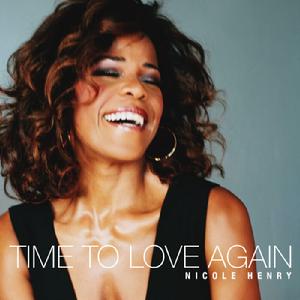
On Time to Love Again, the multiple award-winning vocalist Nicole Henry performs an excellent mix of compositions from Broadway musicals and reimagined pop tunes. Her 8th recording is jazzy, powerful, charismatic and serves as a new standard for any aspiring jazz vocalist. Joining Nicole are 21 South Florida musicians and background singers who provide excellent support and musical virtuosity for nine songs written by such notable and award-winning composers as Stevie Wonder, Rogers & Hart, Newley & Briscusse, Sade, and James Taylor. Nicole produced along with Pete Wallace for Banister Records.
Nicole’s dynamic vocal range, impeccable phrasing and bluesy gospel flavors provides the perfect ambiance to “Feeling Good” the well-known Newley-Briscusse standard made famous by Nina Simone. Her arrangement features just drums and shaker at the open before Wallace joins in with a burning piano solo. “Wild Is The Wind” is among the more beautiful songs on the recording. Here the sensual saxophonics of Troy Roberts’ sexy tenor sax and the intimate pianism of Wallace are the perfect balance for Nicole’s interpretation of this beautiful ballad. Her vocals are sexy, gentle and emotional.
Overall, Time to Love Again is one of Nicole Henry’s best albums and is a sure hit for the lovely chanteuse. Check it out. TIME TO LOVE AGAIN is available everywhere for download and streaming. Purchase an autographed CD and more at www.NicoleHenry.com
Step Aside
Soul Cafe
Led by guitarist/composer Ed “Mr. Ed” Starrett, Soul Café has been thrilling audiences in the St. Louis area for more than 20 years with their blend of complex jazz and funk, Latin accents and driving grooves. Now, with their new album Step Aside, the six-piece fusion ensemble urges listeners to clear a path for their exhilarating, infectious sound.
Step Aside also serves as both reintroduction and rebirth for Starrett and Soul Café. It’s the band’s first album wholly composed of original material since their 2003 debut, Unspoken Request and the first studio session for the band’s stellar current line-up for the last twelve years: keyboardist Jerry Scruggs, drummer Tim Quarells, bassist Charles “Bud” Quarells, and percussionist Donald Williams. The one exception is saxophonist Jason Swagler, who joined just four years and serves as producer on Step Aside. Swagler also assembled and arranged the horn section featuring Garrett Schmidt (trumpet) and Cody Henry (trombone).
The band’s sound reflects the influences of such fusion greats as Yellowjackets, John Patitucci, Lee Ritenour and Chuck Loeb, as well as St. Louis’ own Dave Weckl. The recording opens with the loping grooves of Jerry Scruggs’ “Major Over Minor” and is followed by the second of four original songs he contributed to the album. Titled “It’s On The Way,” this song reflects the inspiration attained from the Yellowjackets’ fusion style of music. Scruggs also penned the glistening ballad “Sunset in May” and the deeply funky closing tune, “Back Home.”
Opening with a brief, psychedelic meditation by Starrett, “Step Aside” captures the hard-driving jazz-rock sound that ignites Starrett’s passions as well as his determination that steered him through his personal challenges. He added “Unspoken Request,” as his second original contributed to the album. Both songs glimmer with excellent vibes, musicality and immediate recognition of each band member’s exceptional interplay.
A showcase for the band’s rhythmic tandem, “Great Things” was written by drummer Tim Quarells and is driven by his propulsive connection with percussionist Donald Williams. Swagler contributed the taut, rocking “Another Cup.”
The jazz fusion music heard on Step Aside is amazing. The musical language of Soul Café evokes emotions and passions via the unbridled use of improvisation and individual interpretations. All of the original compositions express the virtuosity of the band members and their personal sound signatures will certainly captivate you, dear listener. Check it out. Buy Step Asidehere.
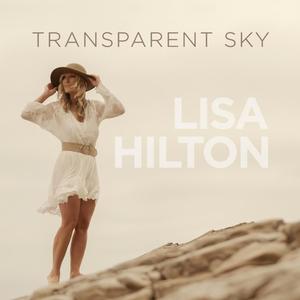
Transparent Sky
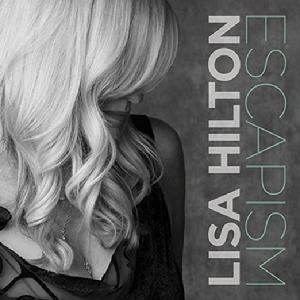
Lisa Hilton
Pianist/composer Lisa Hilton, drummer Rudy Royston and bassist Luques Curtis, enthusiastically entered 2021 with a vibrant new jazz offering titled Transparent Sky. According to Lisa, she thinks the title refers to how many of us are feeling right now. “If a sunny sky connotes a good future, and a dark sky represents where humanity was in 2020, Transparent Sky has a sense of taking the moment for what it is – and to cherish what we can here and now. We don’t have any promises for tomorrow, do we? Today looks pretty good though.”
All 10 songs were composed by Lisa Hilton except for the Billie Holiday/Arthur Herzog, Jr. classic “God Bless The Child.” The entire recording is very uplifting and has a lot of energy, as well as a LOT of movement and richer chords and harmonies. Rich with glorious harmonies and unique compositions, Hilton’s swinging band radiates a sun- bleached aura to listeners. Throughout the album Hilton, Royston and Curtis develop a surprisingly wide range of rhythmic ideas from a variety of genres, masterfully blending classic traditions with new approaches and upbeat style.
Lisa adapted many rhythm changes and multiple harmonic directions for the music which differs from her previous recordings. The Latin tinged "Santa Monica Samba," is quickly followed by the equally energetic "Random Journey.” "Living In Limbo," "Chromatic Chronicles," "Fall Upon a Miracle" and "Infinite Tango," highlight the multiple creative rhythms of Hilton’s compositions and showcase ample opportunities for Curtis’ agile bass, and the delightful details of Royston’s drums. Hilton and company skillfully cover "God Bless The Child" while her original titled "Extraordinary Everyday Things" is a calm and expressive song. She concludes with the title track, "Transparent Sky" as a sonorous piano solo.
Overall, Transparent Sky exudes the musical growth and superb musicality of Lisa Hilton and her trio members. This recording surpasses the standards she set with previous recordings and signifies her ultimate connection to a new global fan base. Check it out.
Monterey Groove
Gary Meek
On Monterey Groove, saxophonist/keyboardist Gary Meek introduces his stellar new band to the world while revisiting a number of original compositions from his rich catalog. The project includes his core quartet of guitarist/producer Michael Lent, bassist Robert Wider and drummer Skylar Campbell along with 11 guest artists, including some of Meek’s long-term collaborators, such as drummer Dave Weckl, vocalist Flora Purim and percussionist Airto Moreira.
Monterey Groove, is a vibrant set of modern fusion that celebrates the inspiring and natural musicality of Monterey. Released via Autumn Hill Records, the recording includes 11 tunes from throughout Meek’s 30-year career as a leader, along with songs written to showcase collaborators new and old. Gary wrote 8 of the 11 songs and co-wrote two with Michael Lent. “The Hope” was written by Michel Colombier with lyrics contributed by Flora Purim.“For A Long Time” opens the set with an immediate command for your attention. Its vibrant vibe is showcased via Meek’s exceptional keyboard soloing and tenor saxophonics. The added percussion programming, bass and drumming is completed by an awesome guitar solo from Lent. The sonics change via a lovely intro from Lent’s guitar that gently segue into Meek’s sax and piano solos on the lovely ballad titled “Midnight Sky.” This is a true Monterey vibe and sets the tone for “Monterey Groove.” The title song elaborates the sultry sophistication and creativity of Monterey with its eclectic tones and multi-octave sonics from Meek’s saxophone playing. The fusion generated by each musician gives you a nice feeling.
Overall, Monterey Groove is exactly that…a chillaxin’ groove of great original songs that you’re sure to enjoy. It certainly meets the limitless standards Gary Meek has set via his previous recordings. Check it out. Keep in touch with Gary Meek at https://garymeek.net/
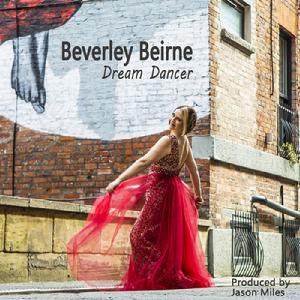
DREAM DANCER
Beverley Beirne
Grammy-winning composer/keyboardist/producer Jason Miles provides a variety of his award-winning skills on U.K. jazz vocalist Beverley Beirne’s latest release titled Dream Dancer. Miles produced the recording, plays the Hammond B3, the Fender Rhodes and also arranged strings on a couple of tracks. Dream Dancer is the follow up to Beirne’s album called Jazz Wants to Have Fun which Jason Miles also helmed. The core band – pianist Sam Watts, bassist Flo Moore and drummer/percussionist/congas Ben Brown - support the vocalist’s musical integrity on 12 amazing covers of dream and dance-themed compositions.
Opening the program is the upbeat cover of Irving Berlin’s celebrated composition “Let’s Face the Music and Dance.” Beirne and company follow the syncopation and lively rhythmic nuance of the swing genre as Beverley deftly italicizes the song's exotic, romantic sense in her lovely alto range. There is a memorable saxophone solo by saxophonist Rob Hughes who also underlines Beirne’s vocals as pianist Sam Watts comps with tonal balances. Hughes delivers his dynamic saxophonics throughout the recording and really nabs your attention during his searing robust solo on “Winter Moon.”
The late saxophonist Duncan Lamont also has a formidable presence on several tracks and contributes brief solos and comps on his lovely original ballad called “Now We’re Just Friends,” and the buoyant interpretation of “Fascinating Rhythm/Thou Swell.” Lamont also composed the samba “Old Brazil.”
Beirne sings a luscious version of Billy Strayhorn’s “Day Dream.” This peaceful ballad is a jazz waltz and features lovely accompaniment by pianist Sam Watts who delicately underlines Beverley’s intimate intonations and diverse vocals before seguing into a creative stream of consciousness-like solo.
Jason Miles’ brilliant contributions as a producer/performer to the recording come without any doubts. He not only brought his creativity to the exceptional concepts heard during the Dream Dancer repertoire but his skillful performance on Fender Rhodes makes “Let’s Dance” now tuned as a soulful samba more memorable. His string arrangements on the dramatic “Temptation” and his Hammond B3 chops on “Fascinating Rhythm/Thou Swell” elevate the musicality of the song making it tight with cleverly changing rhythmic patterns, along with adept scat and sax interactions. “Old Brazil” truly benefits from Miles’ string arrangement that is supported by Duncan Lamont on saxophone, Romero Lubambo on guitar, and Cyro Baptista on percussion.
Overall, Beverley Beirne offers an exceptional program of dream and dance themed songs – some of which were originally introduced via films, Broadway musicals and big band orchestras. Available through 33Jazz label, Beverley Beirne’s new album shows a completely different side and strength to her performance than heard on her previously released recordings. You are sure to enjoy her interpretations since they swing with fluid, vibrant vitality, passion and imaginative multi-octave vocals. Give a listen to Dream Dancer and then purchase it. Click here.
Stories
Tom Kennedy
featuring Dave Weckl
Bassist/composer Tom Kennedy shares musical memories from his travels on this awesome recording that features drummer Dave Weckl, Mike Stern, Gary Meek, Bill Evans, Randy Brecker, Jay Oliver, Ada Rovatti and more. Simply titled Stories, this 8-track program was produced by Tom Kennedy who also wrote all of the songs. Dave Weckl served as Associate Producer.
The songs reflect Kennedy’s memories of colorful life on the road while touring in Australia, China, Europe and the USA. and is his first release of all original compositions. “Hurry Up” opens the set with its energetic riffs and brass section featuring Nick Marchione. The funky spirit of “The 70s” is ripe with a phase in Kennedy’s musical development that also features Weckl and profound grooves from Jay Oliver on keyboards, Roger Squitero on percussion and Gary Meek on soprano sax. This song has a plethora of side effects! All of the songs are skillfully produced and entice the listener to stay tuned from beginning to end.
Check out Stories and you’ll definitely find yourself personally groovin’ to Kennedy’s well-crafted memories. Think back and you’ll find yourself somewhere in some of these great songs.
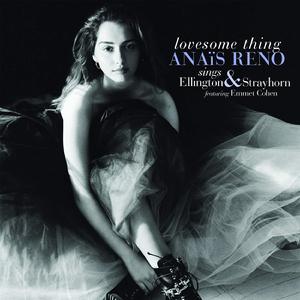
Lovesome Thing,
Anais Reno Sings
Ellington & Strayhorn
featuring Emmet Cohen
Jazz vocal prodigy Anaïs Reno has released an impressive tribute recording that honors Duke Ellington and Billy Strayhorn. Lovesome Thing, Anaïs Reno Sings Ellington & Strayhorn featuring Emmet Cohen was recorded when Reno was 16 years old but it sounds mature, passionate and skillful. The 12 songs are performed by Reno along with Emmet Cohen on piano, Russell Hall on bass, Kyle Poole on drums, Tivon Pinnicott on saxophone and Juliet Kurtzman on violin. Cohen also arranged the songs.
Reno sings wonderfully articulate versions of such Ellington/Strayhorn favorites as “Caravan,” “Lush Life,” “Mood Indigo,” and “Take The A Train.” Reno also sings an ingenious collage consisting of “Chelsea Bridge” and “A Flower Is A Lovesome Thing.” Her bluesy take on this medley possesses the social elegance Ellington was known for and oozes the inspired respect she has for both musicians. Violinist Juliet Kurtzman takes a brief solo that adds a lovely dimension to the medley as Cohen underlines her efforts beautifully on the piano.
Although Anaïs Reno is still in her teens, her vocals belie her age. They are sophisticated, warm, mature and certainly reflect an intimate knowledge of Ellington & Strayhorn’s significance. Give Lovesome Thing, Anaïs Reno Sings Ellington & Strayhorn a listen and then add to your collection. Available now on Harbinger Records.
The Hit
WRD
WRD, the dynamic, gritty organ trio borne from the brain of The New Mastersounds’ guitarist/bandleader and Color Red record label founder, Eddie Roberts, have released their debut LP titled The Hit on the Color Red label. The group features guitarist Roberts, drummer Adam Deitch and organist Robert Walter co-producing on mostly first takes of eleven tracks that invoke 1970’s fusion, funk and soul jazz.
Walter, Roberts, and Deitch are a formidable musical team that are well-versed in the stylings and potential of the organ trio and inspired to reach for greater, more complex heights in the company of respected peers. Funky cuts like “Judy,” “Corner Pocket,” “Bobby’s Boogaloo” set the tone for a funky good time. The group gets more soulful on “Meditation” and are even more fired up on “Sleep Depraved.” The ultra-moving sonics on this riveting album stay with you long after the songs end.
Overall, the members of WRD raise the bar for each other and make The Hit quite the musical experience. Their elevated quality of the music, the format, and its ever-evolving history is filled with power, great improvising and synergy that can only be found at the highest levels of the music scene today.
For more information on WRD at their Color Red recording label, please visit: Color-Red.com
Image:
The 19th Annual “Everyone Wins” Nominee Gift Bags Celebrate Hollywood’s Biggest Night
By Paula Edelstein
The Los Angeles-based marketing company, Distinctive Assets, will again be independently producing their legendary “Everyone Wins” Nominee Gift Bags. Just as the Oscar® ceremony has adapted to unique circumstances, the “Everyone Wins” gift bag has also. Now in its 19th year, Distinctive Assets will honor Oscar® Nominees in the Best Actor + Actress, Best Supporting Actor + Actress and Best Director categories. As a result, Daniel Kaluuya, Olivia Colman, Amanda Seyfried, Sacha Baron Cohen, Riz Ahmed, Viola Davis, Andra Day and Carey Mulligan will be treated with a bevy of congratulatory gifts with purpose.
“While the end result may look at first glance like the same cornucopia of fabulous gifts we always assemble, this year’s contents are particularly special. The companies we are featuring embrace diversity, inclusion, health and philanthropy and are giving back to their communities and the world at large in significant ways.” ̶ Lash Fary (Founder, Distinctive Assets)
What’s in the “Everyone Wins” gift bag?
Lucky nominees will receive the following products in their “Everyone Wins” gift bag which will be delivered by Postmates. The gift bag includes Postmates’ limited edition high-design Don’t Cookbook, personal training sessions with celebrity trainer Alexis Seletzky, fitness lifestyle package from Andrea Marcellus, LOCI premium vegan sneakers, stylish luxury socks from London Sock Company, Ryst Maskthe wristband that turns into a protective face mask, the ultra-premium special reserve Tequila Antigua Cruz Añejo Cristalino, Tractive GPS location & activity tracker for pets, Trust Me Vodka’s limited-edition artist series collector box featuring artwork by Evgeniya Golik, luxury vintage sunglasses with custom lens from Vintage Eyewear, and many other exciting gifts.
This year’s “Everyone Wins” nominee gift bag also includes several “big ticket” items such as a consultation with world-renowned cosmetic surgeon and liposuction specialist Dr. Thomas Su of Art Lipo Plastic Surgery. Dr. Su specializes in liposuction and is the innovator of the Interactive Lipo Method and Celebrity Arms™ Sculpting. Another “big ticket” gift is Courtney Lawless' Investing Masterclass available via MOXĒHUB. Courtney Lawless is a venture capitalist, angel investor and Executive Producer/co-host of Amazon’s Wolf PAC and is offering a complimentary private session to learn the art of angel investing.
Distinctive Assets is a niche marketing company offering celebrity seeding, business development and branding opportunities within the entertainment industry and beyond. Distinctive Assets spearheaded the proliferation of award show swag and boasts an impressive resume of prestigious events that includes the GRAMMYs®, Latin GRAMMYs®, Tonys, American Music Awards, Kids’ Choice Awards, BET Awards, CMA Awards and Academy of Country Music Awards. From Fortune 100 companies to start-ups, clients benefit from customized marketing solutions that leverage unparalleled experiences as well as access to top celebrities, premier events, influential media and strategic partners.
The “Everyone Wins” Nominee Gift Bags are NOT affiliated in any way with the OSCARS® or the Academy of Motion Picture Arts & Sciences. A.M.P.A.S. does not award, sponsor, endorse or provide these gift bags. Neither the Academy nor Distinctive Assets wants there to be any association between the “Everyone Wins” Gift Bags and the OSCARS® or the Academy.
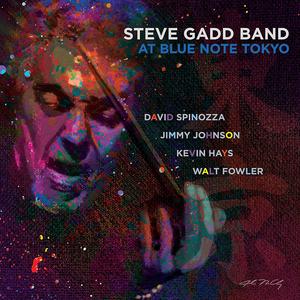
Steve Gadd Band At Blue Note Tokyo
Steve Gadd Band
The Steve Gadd Band is a progressive/fusion band featuring drummer/composer Steve Gadd, Jimmy Johnson on bass, Walt Fowler on trumpet, Kevin Hays on keyboards, and guitarist David Spinozza. Steve Gadd’s new album titled Steve Gadd Band at Blue Note Tokyo was recorded live on December 18, 2019 and is available on BFM Jazz record label.
It’s all about the groove on 7 original songs written or co-written by a coterie of Gadd’s inner circle of musicians. Duke Gadd, Michael Landau, and Gadd’s present working band of Johnson, Fowler, Hays and Spinozza contributed their original compositions for the recording. Covers of Wilton Felder’s “Way Back Home” and Bob Dylan’s “Watching The River Flow” round out the session list.
The tracks on At Blue Note Tokyo were hand-picked and mixed by Gadd and his son, Giancarlo, from the two sets the band played at the legendary club. Three of the nine tracks – “Doesn’t She Know By Now,” “Hidden Drive” and “Walk With Me,” have never been recorded or released by this band. The songs range from stinging, keening, blues-tinged tunes like “Where’s Earth?” to Latin-flavored funk heard on “Timpanogos.” Keyboardist Hays, alternates between piano and Fender Rhodes as well as offering his soulful vocals on “Walk With Me,” and the shuffle blues version of Dylan’s “Watching the River Flow.” Throughout, Steve Gadd provides awesome grooves via his masterful rhythmic and percussive drumming.
Drummer/composer Steve Gadd has worked with Chick Corea, Chuck Mangione, Al DiMeola, and Paul Simon, among others, and their influences are certainly revealed in Gadd’s exceptional musicality. As a result Dr. Steve Gadd’s musical approach to drumming and composition provide the perfect foundation for the musical explorations heard on Steve Gadd Band at Blue Note Tokyo. Keep in touch with Steve at https://www.drstevegadd.com/
CAMINANDO
Juan Carlos Quintero
Juan Carlos Quintero has re-issued his acclaimed 1997 recording titled The Way Home under a new title and imprint. The recording, re-titled as Caminando and released by Moondo Music, LLC, has 10 songs that features Quintero on guitar with such luminaries as percussionist Munyungo Jackson, bassist Eddie Resto, pianist Joe Rotondi, among others. All of the music was composed and arranged by Juan Carlos Quintero except for “Caribbean Sun Dance” which was co-written with Kenny Hudson. Qunitero produced the recording with Guillermo Guzman.
Quintero’s guitar playing is melodic and emotional. He narrates each story behind the song through his warm sonics that are influenced by jazz, Latin, pop, and Caribbean rhythms. The recording opens with JC’s signature melodic guitar playing on “El Baile.” This beautiful song reflects the colorful sounds and diverse rhythms based on the cumbia, a folk style that originated in Columbia. It could also depict a dance between two emotional partners. The title track, “Caminando” is a graceful cha cha cha that translates as a groove based metaphor for walking ahead. Quintero and company also offer polyrhythmic hybrid excursions like "Hermanos," which fuses fast and rumbling flamenco runs with folksy, twangy Country and Western sensibilities. Quintero’s diverse musical rhythms and styles are prevalent throughout the recording and are highlighted once again in the romantic ballad titled “The Way Home.” This lovely bolero is among the most beautiful songs on the recording.
Overall, Caminando is radio-friendly pop-flamenco that is grounded in Quintero’s boundless Columbian roots. However, he effectively bridges the gap between his roots with jazz, pop, and priceless World music rhythms. This recording is a must-have for fans of Juan Carlos Quintero.
SERENATA
Gregg Karukas
Serenata is Gregg Karukas’ first solo piano project for Nightowl Records. The recording offers romantic impressions of classic songs from such iconic Brazilian artists as Milton Nascimento and Dori Caymmi as well as new and re-imagined compositions written by Karukas. The Grammy-winning composer/pianist/producer offers a sensitive and very lyrical approach to his interpretations that you are sure to enjoy.
Among the compositions Karukas has chosen to perform are two songs written by Milton Nascimento and Fernando Brant. “Travessia, which is the title track from Nascimento’s 1967 album, is a beautiful ballad that gently provides for Karukas’ intimate touch and skillful playing. “Ponta de Areia” which is one of the strong emotional hits from Nacimento’s 1975 album titled Minas, is heartfelt and deeply spiritual. Both songs are from two of Nacimento’s classic albums that are indicative of his musicality prior to his days with Clube da Esquina
The album Clube da Esquina featured several of the Nascimento/Lo & Marcio Borges hit songs including “Clube da Esquina No.2.” This song is absolutely beautiful and is impeccably interpreted from its vocal rendition by Karukas’ masterful pianism. “Historia Antiga,” which was composed by Dori Caymmi and Paulo Cesar Pinheiro, is a seductive, caressing gem that moves away from the samba rhythms heard on the original title track from Caymmi’s 1991 album titled Brasilian Serenata. However, Karukas’ arrangement is stylistically superb as a piano interpretation.
The songs Gregg Karukas wrote for Serenata includes the title track, “Better Days,” “Sound of Emotion (Reprise),” “Don’s Song,” “Para Sempre (Until Forever),” “Lament (Final Embrace)” and “Long Ago.” They all reflect the deep sentiment Karukas felt during his creative process which sincerely reveals his love for his departed wife, Yvonne, and the Brazilian songwriters he pays tribute to. Overall this debut solo piano offering is a beautiful masterpiece from Gregg Karukas.
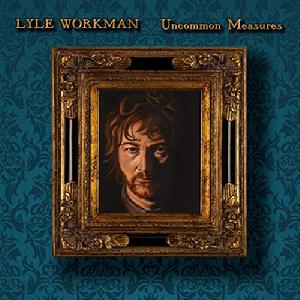
Uncommon Measures
Lyle Workman
Lyle Workman’s Uncommon Measures was four years in the making and resulted in what he calls the “…the culmination of a lifetime of music.” Workman, who is known both as a first-call sideman/session musician and a respected film composer produced the nine tracks on Uncommon Measure, performs on electric and acoustic guitars and keyboard and a 63-piece orchestra. Recorded live at Abbey Road Studio, this epic Jazz Fusion/Progressive Rock collection also features five orchestral arrangements by Workman and orchestration by John Ashton Thomas and Bruce Fowler. As if those credits aren’t enough, Workman wrote all of the songs except “Our Friendship,” which was composed by John Ashton Thomas.
The recording opens with “North Star” a powerful Jazz/Rock fusion of jazz harmonies and improvised rock music. Workman’s electric guitar work is complimented by the exceptional drumming of Vinnie Colaiuta, the funky bass playing of Tim Lefebvre and violinist Charlie Bisharat. “All The Colors of the World” features elaborate chord progressions, unconventional time signatures, and melodies with counter-melodies. This ballad also features the aforementioned musicians in an exceptional interplay of musical virtuosity. “Arc of Life” is a 10-minute masterpiece that features Workman’s “wicked command of his instrument” during powerful, screaming, solos or as a whispering guitar genius. This song is truly inspired and could be interpreted as the pinnacle of the arc of Workman’s own musical life. “Rise and Shine” is exactly what Workman and his orchestra do during his guitar solos and their exceptional playing. This song rocks with the power drumming of Matt Chamberlain, the pedal steel mastery of Greg Leisz and Tim Lefebvre's awesome bass playing. Lyle Workman's intense guitar solos are meant to be played more than once. Check this song out. You'll love it.
Overall, the nine compositions on Uncommon Measures are a definite indication of Lyle Workman’s virtuosity as a Jazz/Rock Fusion composer, musician and orchestral arranger. The recording emphasizes the genre’s elements of exploration, energy, electricity, intensity, virtuosity, volume and free blowing by a large ensemble with electronic keyboard and guitar in many of the ways that Miles Davis, John McLaughlin, Tony Williams Lifetime, Herbie Hancock, Chick Corea and later Santana, plugged into electronic effects back in the 1960s. Find out more about Uncommon Measures. Click here.
More Than Another Day
Lisa Hilton
More Than Another Day is the latest jazz recording from composer/pianist/producer, Lisa Kristine Hilton. The ten-track recording features Hilton, Rudy Royston on drums, and Luques Curtis on bass. Lisa composed all of the songs with the exception of the great Cole Porter classic, “I’ve Got You Under My Skin.”
More Than Another Day begins with the title track which showcases the creative range of Hilton’s pianism and her highly regarded accompanists. Together, they offer a variety of rhythmic ideas and styles as they anticipate each other’s sonic creations. The trio powers through the upbeat swinger “Retro Road Trip” with its groovy riffs while “Secret Beach,” and “Karma Chaos” both exude refreshing Latin tinges. “Blues & Beauty” is a bluesy piece that reflects Hilton’s diverse songwriting and arranging skills as well as her ability to play the blues with an intimate flair. This song is quite mesmerizing. The ballads, “No Sleep Until…,” “Today I Looked At Love,” and “So This Is Love” all give the album a rich balance of emotions and harmonic colors that invite you, dear listener, into Hilton’s lair of tenderness.
Overall,More Than Another Day is an exceptional offering that ranks at the top of Hilton’s repertoire. It gives the listener the complete picture of her masterful talents as a pianist, composer and bandleader in addition to offering nearly an hour of awesome entertainment. Check it out then buy it here.
LOVE YOU MADLY: LIVE AT BUBBA'S
Monty Alexander
Resonance Records has released the great Monty Alexander’s superb double-disc recording titled LoveYou Madly: Live at Bubba’s. The recording is in stores now and you can be assured that it definitely ranks high among his best recordings. The album features previously unreleased songs captured in 1982 at the legendary jazz nightclub in Fort Lauderdale with excellent liner notes by Jazz Historian Willard Jenkins along with reminiscences from band members and tributes from such great pianists as Kenny Barron, Benny Green, Emmet Cohen and Christian Sands.
The master pianist performs for 92 minutes with noted sidemen Paul Berner on bass, Duffy Jackson on drums, and percussionist Robert Thomas, Jr. on songs from his personal collection of ballads and standards that range from the rich island flavors of his Jamaican roots on his original recording titled “Reggae Later” to the swinging title track “Love You Madly,” to an excellent take of Brazilian jazz on “Samba de Orfeu.” Monty also plays his original compositions titled “Sweet Lady,” “Eleuthra” and “Consider.” A reimagined “Body and Soul” will make you fall in love with Monty’s great pianism all over again. So check it out and then add it to your collection of great jazz piano recordings by Monty Alexander. Available now. Click here.
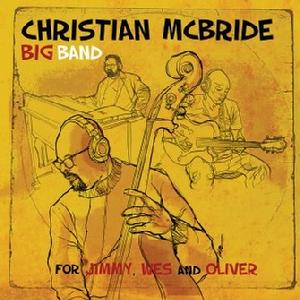
For Jimmy Wes and Oliver
Christian McBride Big Band
Christian McBride solidifies his role as the champion of the past, present and future of jazz with his GRAMMY® Award-winning Big Band’s new album in tribute to Jimmy Smith, Wes Montgomery and Oliver Nelson. Featuring special guests Joey DeFrancesco and Mark Whitfield, For Jimmy, Wes and Oliver honors the historical legacy of the jazz legends who shaped the soul of music for generations to come.
To immediately set the tone of the recording, the CMcBBB opens with Oliver Nelson’s swinging arrangement of “Night Train.” The band lays it in the groove as Mark Whitfield gives a great solo that segues into Joey DeFrancesco’s organ solo. The band continues with an uninhibited celebration of Wes Montgomery’s “Road Song” that is catapulted into syncopated action by another mellow solo from guitarist Mark Whitfield before the instrumentalists join. This excellent arrangement by Christian McBride is definitely a keeper.
Freddie Hubbard gets his props with a very cool version of his “Up Jumped Spring” during which Joey DeFrancesco plays the melody. Smith’s protégé captures his distinctive sound on the Hammond-B3, including the percussive "clicks" at some point during the song. This song also features comping by McBride on bass, a nice solo from Mark Whitfield on guitar and Quincy Phillips on drums. This same quartet also performs “The Very Thought of You,” “I Want To Talk About You,” and “Don Is.”
The full big band returns on “Milestones” and “Down By The Riverside” with swinging brass and woodwinds killing two more of Oliver Nelson’s great arrangements.
Overall, For Jimmy, Wes and Oliver is very enjoyable and is among the greatest Christian McBride Big Band recordings. It’s a definite keeper and one that should be in your collection because of the stellar performances and the exceptional song selection.
Jazzical Journeys
Gary Gray
Bryan Pezzone
Juliette Gray
For Jazzical Journeys, music director Bryan Pezzone has conceived a program of arrangements presented in duos, trios and ensembles for piano, 3 clarinets, saxophone, string quartet, French horn, bass, drums and spoken word from the Great American Songbook. A newly commissioned piece by Juliette Gray, written by Mr. Pezzone and dedicated to Gary Gray and his personal musical sensibilities is among the wonderful songs presented on the recording.
The ten tracks on Jazzical Journeys are a hybrid of the jazz, classical and film music styles written by some of your favorite composers and re-imagined by clarinetist Gary Gray, pianist and music director Bryan Pezzone and producer/voice-over artist Juliette Gray alongside a coterie of notable musicians. This recording is from the concert presented at UCLA and was conceived as a celebration musical narrative from the Classical Era, Jazz-America' indigenous art form - and music from the cinema.
The recording opens with “Gary’s Gershwin” which is a medley of cues from George Gershwin’s most popular songs played by Gary Gray on clarinet with the Jazzical Ensemble. Cues within the medly include the bluesy clarinet solo from Gershwin’s milestone “Rhapsody in Blue” where the jazz idiom was applied to an essentially classical form. Cues from “S’Wonderful,” “But Not for Me,” “Summertime,” “The Man I Love” and a nicely orchestrated cue from “An American In Paris” round out the first track.
“Mozart –Laura” blends the 2nd movement of Mozart’s clarinet concerto with the theme song from the film Laura written by David Raksin. This is an amazing example of jazzical fusion. As the recording continues you are treated to an awesome medley called “Obrigado Brasil” which features Gary Gray on clarinet, Bryan Pezzone on piano, Simone Vitucci on cello, Tim Emmonds on bass and MB Gordy on percussion really bringing the genius of Jobim and Bonfa together. They skillfully perform “Bonita,” “A Day In The Life of a Fool,” “Inutil Paisagem,” and “Samba de Orfeu” in a fusion of Brazilian jazz and classical forms in a style distinguished by its attractive modernism.
Duke Ellington revolutionized the concept of jazz by writing complex arrangements that took on the dimensions and scope of classical compositions while retain an underlying jazz feeling. The “Ellington Medley” of “Mood Indigo” “Don’t Get Around Much Anymore” are just two great songs that exude the jazzical theme. Gary Gray plays brilliantly on clarinet with the Jazzical Ensemble and gives the listener his acquired fundamentals of music theory and remarkably strong melodic gifts.
Bryan Pezzone’s original songs are absolutely brilliant. “Fantasie De La Mer” and “Bryan’s Berceuse” entice the senses and lull the listener into a perfect finale to this recording. Overall, this collection of songs is presented in an excellent communicative style that shows the masterly technique of fusing jazz and classical elements to state the theme of jazzical as a familiar genre.
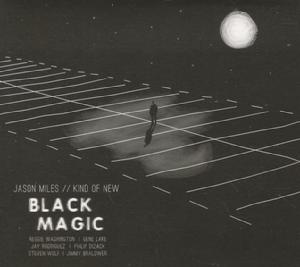
Black Magic
Jason Miles
Black Magic came about after the successful European tours of Jason Miles’ projects titled “Kind of New” and “Kind of New 2-Blue is Paris.” Jason realized the music had to go to the next level to keep the projects alive so after recording four live tracks during a hot gig at NuBlu in NY, Jason called trumpeter Philip Dizack, saxophonist/clarinetist/flutist Jay Rodriguez, electric bassist Reggie Washington and drummer Gene Lake into the recording studio and recorded six new studio tracks to complete his musical vision for the album titled Black Magic. Jason Miles produced, arranged, composed and plays piano & keyboards on the ten-track recording that features a total of 9 songs written or co-written by Jason with such luminaries as Ingrid Jensen, Tom Harrell and the late Michael Brecker.
The one cover, “Jean Pierre,” written by Miles Davis, features stellar interplay by all of the band members and even more memorable soloing by trumpeter Philip Dizack. The beefed up rhythm section, trumpeting, electric bass, keyboard and the extended improvisations on “Jean Pierre” make it one of the best songs on the recording.
With drum programming by Jimmy Bralower on “Kathy’s Groove” and by Steven Wolf on “Wolfedelic” the jazz fusion on Black Magic underlines the freedom in the grooves where jazz meets rock. The powerful rock beat on “Ferrari” drives this song forward and is sure to assist in driving Black Magic onto the album charts.
Overall, Black Magic has strong electronic funk and rhythmic grooves, abstract interplay and great production values that hook you from beginning to end. Check it out. Available on RopeADope Records MARCH 6, 2020.
Carmen Lundy talks about the making of Modern Ancestors
Interview by Paula Edelstein
Modern Ancestors. Two words with significantly different connotations that come together and remind us that not only do opposites attract, but that we are all products of those who came before us; our Ancestors can be honored and reinterpreted, continually present and very much a part of who we are and what influences us today.
Such is the common thread running through Jazz vocalist and composer Carmen Lundy's brilliant new album, Modern Ancestors. Featuring 10 self-penned and arranged tracks and a stellar band consisting of Julius Rodriguez on piano, brother Curtis Lundy on acoustic upright bass, Kenny Davis on electric and acoustic bass, Mayra Casales on percussion, Terreon Gully and Kassa Overall on drums and Andrew Renfroe on guitar, Modern Ancestors is set for release October 25th via Afrasia Productions and will be accompanied by tour dates both in the US and abroad.
SOTJ spoke to Carmen Lundy about the making of Modern Ancestors and here’s what she told us:
SOTJ: Carmen, what a lovely recording. I simply love the title…Modern Ancestors. Please tell our readers how you commenced your new project Modern Ancestors. Did you write all new material especially for the recording or did you dip into your treasure trove of songs that you hadn’t recorded to complete the recording?
CARMEN: All the songs here are original songs. There are two songs that were taken from the “ treasure trove.” “Still” was conceived in the 80’s. My arrangement of “Meant For Each Other” was written by Marilyn Castilaw and Julie Raynor during the early eighties.
SOTJ: Do your record label executives, managers, band mates, engineers ever initiate ideas or suggest a direction for your projects?
CARMEN: No, hardly ever. I’ve been recording on the Afrasia label (which I co-own with Elisabeth Oei), since 2005 after leaving Justin Time. I’ve never been signed to Blue Note, Verve, or any of the major labels so my recording side has been independent. My recording engineer Don Murray however was so incredibly supportive in helping me follow through on this project. It’s been very challenging but also a wonderful opportunity to hopefully add greater value to the jazz lexicon by singing my own music.
SOTJ: You’ve invited some awesome musicians to join you on your latest musical journey including your brother Curtis Lundy on bass, Terreon Gully and Kassa Overall on drums, Mayra Casales on percussion, guitarist Andrew Renfroe, and several others. How did you select which musicians would accompany you on this project?
CARMEN: As I write, I am always hearing the player, always imagining who it will be. Like, Andrew, who has been with me for five years. Curtis, of course I knew had to be a part of this album. I knew exactly what songs he would play because as my brother and bassist he had the sound and input I needed. Terreon and I worked together only once before in Athens, Greece back in 1999, and I knew it had to be him. He had only two days available in his busy schedule and he was able to make it to LA. Pianist, Julius Rodriquez is only 20 and he’s only playing the acoustic piano, he’s just incredibly flexible. I play all the other keyboard instruments. Bassist, Kenny Davis, drummer Kassa Overall and I had worked together over the years with the great Geri Allen. Mayra Casales is part of my Miami history and had introduced me to the Latin culture. She is on every record of mine that features percussion. She was a natural component for this rhythm section.
SOTJ: The agility, flexibility, contrapuntal possibilities and abundance of timbres inherent in the instruments that comprise your ensemble really energizes the musical imaginations of your listeners. Will they be the ensemble you take on tour?
CARMEN: This key band will be at SF Jazz in November 14-17, 2019in San Francisco and of course it would be great to have these players on tour. It is jazz and it is what we do so we will be as flexible as can be…always improvising.
SOTJ: When composing, do you find yourself preoccupied with matters of instrumentation, form, style, or themes in terms of what you want the complete recording to sound like?
CARMEN: I think the answer is yes but that’s not what drives the idea as a whole. At the end of the day, I still have to be able to sit down and play or sing the composition and then let listeners use their imagination. A video created by Carmen and set to "Eye of the Storm" can be watched via https://spaces.hightail.com/space/4l1a3kq2E3.
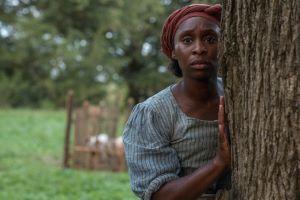
SOTJ: Your catalog of music includes hundreds of songs written in a variety of media that reveal your versatility and compositional integrity. In your liner notes about “Burden Down, Burden Down” you’ve mentioned a biographical detail that could hold a key to understanding this song for someone hearing it for the first time. But when I heard “Burden Down, Burden Down,” I immediately thought how it would have been a great song to include in the upcoming film titled Harriet, about Harriet Tubman. This is but one example of how each listener can interpret your compositions. You wrote it with a certain meaning, but when I heard it, I thought of something else and its cinematic qualities. Have you given any thoughts to writing a complete score for motion pictures?
CARMEN: Yes! As a matter of fact, one of my songs will be used in the end credits, a song called “Grace” that I co-wrote with Simphiwe Dana for D.Channsin Berry’s Dark Girls 2. But for me to score a complete film…wow! I live for the opportunity to write for a story that is being told visually.
SOTJ: There are grants and fellowships from the ASCAP, Ford and Guggenheim Foundations, Meet the Composer, Inc., the National Endowment for the Arts and Chamber Music America that support many an artist’s creative endeavors. Have you found any of these organizations to be supportive of your creative efforts?
CARMEN: Yes, but so far they haven't given me grants! It’s nice to know we have these resources so if anyone is willing to give me a grant, I have plenty of great ideas and uses for the grant. The genre has already proven itself so we have to find new ways to bring it to the generations coming up behind us such as the 5 year-old, the 12-year old, the young adult. That would really be wonderful.
SOTJ: Indeed. Thank you so much for taking the time to speak to SOTJ. I look forward to hearing you in concert. Keep in touch with Carmen Lundy at her website - https://www.carmenlundy.com.
"Harriet" is centered on the inherent triumph at the core of Tubman’s biography
By Paula Edelstein
Focus Features’ “Harriet,” a historical drama directed by Kasi Lemmons starring Cynthia Erivo and Leslie Odom, Jr. will hit theatres November 1, 2019. The film written by Gregory Allen Howard and Kasi Lemmons and produced by Debra Martin Chase, Daniela Taplin Lundberg, and Gregory Allen Howard tells the story of Araminta Ross’ escape from slavery and transformation into one of America’s greatest heroes - Harriet Tubman.
The film depicts the horrendous obstacles Araminta Ross aka Minty faced when she became a fugitive slave. After finding out she was to be separated from her family and sold to new owners, Minty’s steadfast belief in God, her courage, bravery and determination got her to the Pennsylvania border where she crossed into freedom and traveled onward to Philadelphia. Once there she met William Still (Leslie Odom Jr.) at the Pennsylvania Anti-Slavery Society who chronicled her journey and her family left behind at the plantation. She takes the new name of Harriet Tubman. Still introduces her to Marie Buchanon (Janelle Monáe) who employs her. However Harriet is determined to free her family and returns several times to the plantations to free hundreds of slaves using the network of antislavery activists and safe houses known as the Underground Railroad. As a result of their logistical decisions hundreds of slaves were freed and Tubman was the first woman to lead an assault during the Civil War where she conducted the Combahee River Raid which set free 700 slaves.
The multiple GRAMMY Award winner and Oscar Nominee (“BlacKkKlansmen”) Terence Blanchard has written an excellent score that plays the role of costar, plot device, emotional trigger and soundtrack all at once. Because many of the slaves could not read or write, Blanchard’s sonic storytelling utilizes known facts that Harriet Tubman and other slaves used songs as a strategy to communicate with slaves in their struggle for freedom. He includes certain coded songs such as “Wade In The Water” which contained words giving directions on how to escape and Nina Simone’s “Sinnerman, Where You Gonna Run To” to convey messages that were consistent with the visuals of the slave escape scenes. “Go Down Moses” is used as an example of Tubman’s tenacity and determination to free the slaves and was one of her secret names. Blanchard’s chosen sonic trends and genres were highly effective and gave the viewer the impression that the music is a natural part of the film and not in competition with the lead actors. Blanchard knew the music’s purpose was to make the movie better and he made sure that his custom music and appropriately placed music cues played their supporting roles beautifully.
Overall, "Harriet" is a compelling film starring gifted actors who deftly portray the film’s emotional story, its triumph of the spirit mood, and its themes of social injustice and fighting the system. The film’s fast-moving sequence of events involving Tubman and her network of anti-slavery activists are complimented by brilliant direction from Kasi Lemmons, an outstanding screenplay, excellent production values, appropriate costumes and a great film score.
Image:
Miles Davis: Birth of the Cool documentary opens in Los Angeles at the Landmark Theatre
Text By Paula Edelstein
Photos courtesy of Arnold Turner
The race for the Oscar for Best Documentary starts with Miles Davis: Birth of the Cool. It is an indispensable piece of jazz history about one of the genre’s most innovative geniuses. The documentary, directed by the Emmy and Peabody Award-winner Stanley Nelson, held its Los Angeles premiere on August 30, 2019 at the Landmark Theatre to a capacity audience that included such acclaimed jazz artists as Herbie Hancock, Wayne Shorter, Esperanza Spalding, Vince Wilburn, Jr., and many others, in attendance. An informative Q&A with Carl Lumbly, Erin Davis, Herbie Hancock, Vince Wilburn, Jr., and Stanley Nelson followed the screening.
The 115-minutes documentary is brutally honest. Nelson’s film portrayed the musical brilliance of Miles Davis, his anger as well as his feelings about life, friendship, drugs, women, clothes and collaborations. Nelson initially conceived the documentary about 15 years ago but it didn’t get its greenlight until two years ago when he received cooperation from the Estate of Miles Davis. It features actor Carl Lumbly (voicing in Miles Davis’ distinctive rasp) speaking out and vividly tracing Davis’ career path from St. Louis, MO through to the innovative musical directions Davis took during his five-decade career that kept him at the forefront of many major stylistic developments in jazz.
Exciting in-concert footage of Davis with his various ensembles and with the legends he played with over the years such as Bird, Dizzy, Monk, Trane and many others punctuates the film’s narrative. Nelson’s inclusion of a stunning black and white clip from Louis Malle’s film Elevator to the Gallows reveals Miles and his French ensemble improvising the entire score while watching the film! Excerpts from the making of Kind of Blue, Davis’ critically acclaimed modal jazz masterpiece recorded in 1959, gives us a compelling and fascinating look inside the recording session of the quadruple-platinum recording that is currently celebrating its 60th anniversary. Throughout his career, Miles Davis won numerous awards and honors including eight Grammy Awards, a Grammy Lifetime Achievement Award, three Grammy Hall of Fame Awards, and 32 Grammy nominations.
The documentary also exposes the suffering Miles Davis faced during his career. He condemns the racism he encountered in the music business and in American society generally. Riveting aspects of Davis’ painful rehabilitations from multiple surgeries and recuperations from drug addiction underline the dangers of drug dependency. We experience his recoveries and the gratitude he felt for those who participated in the revitalization of his creativity.
Never-before-seen archived footage, photos and music along with interviews from many of the people who were important to Miles such as Gil Evans, Ron Carter, Quincy Jones, Carlos Santana, Clive Davis, George Wein, Herbie Hancock, Wayne Shorter, Marcus Miller and the sole remaining member of the Kind of Blue sextet in drummer Jimmy Cobb are featured. Interviews with Miles Davis’ relatives – daughter Cheryl Davis, son Erin Davis, nephew Vince Wilburn, Jr., and ex-spouse Frances Taylor Davis – all disclose several intimate details of family life with the jazz legend.
Overall, Stanley Nelson holds nothing back during this Oscar-worthy documentary and frankly shows the man and his music through what can be termed divine inspiration. Nelson chose “Flamenco Sketches” to play over the closing credits leaving you with that sad but distinctively divine feeling this breathtaking song uncovers. It’s as if Miles’ spirit is floating near, hovering over those he loves, playing his muted Harmon close to the microphone that is powered by his musical imagination. Make sure you see Miles Davis: The Birth of the Cool when it comes to your town.
For a list of screenings near you, please visit https://www.milesdavismovie.com/screenings
Love and Liberation
Jazzmeia Horn
Love and Liberation, Jazzmeia Horn’s new release via Concord Jazz, is filled with songs of daring musicality, emotional power, and messages of immediate relevance. The Grammy-nominated singer/songwriter/bandleader wrote 8 of the 12 new original compositions, all of which are about her and her experiences. Joined by a coterie of A-list musicians including pianists Victor Gould and special guest Sullivan Fortner, tenor saxophonist Stacey Dillard, trumpeter Josh Evans, bassist Ben Williams and drummer/singer Jamison Ross.
The program features an impressive array of musical styles ranging from the upbeat swingers “Free Your Mind,” and “Out the Window,” to soft spoken-word gems like “Time,” and “Only You” to her bluesy “Still Tryin’” and the cover of the Hubert Laws-Jon Hendricks bluesy announcement titled “No More.” Jazzmeia’s duet with Jamison Ross on the George Duke/Rachelle Farrell hit “Reflection of My Heart” is among the more beautiful songs on the album and reveals the versatility of her multi-octave range. She also pays tribute to Erika Badu with a great cover of Badu’s 19 year-old hit titled “Green Eyes.” Horn’s fresh vocals soar, scat and convey the realities of jealousy and a broken relationship this song depicts.
Overall, Love and Liberation is an excellent reflection of Jazzmeia Horn’s musical identity as well as an explicit testament to her creative skills. To stay in touch with Jazzmeia Horn’s happenings, please visit her website at http://www.theartistryofjazzhorn.com
Unknown Dameron: Rare and Never Recorded Works of Tadd Dameron
Paul Combs
Tadd Dameron is a man relatively unknown to many today. As an arranger and composer his work was largely in the background, and except for a few years in the late 1940’s, he was not a band leader or recording artist per se. However, the impact of those few years gives us some insight as to his importance. From 1947 to 1950, he recorded music that inspired and showed the way for Horace Silver, Benny Golson, Frank Foster, Gigi Gryce, and Quincy Jones.As a tribute to Tadd Dameron, musician/educator/author Paul Combs has arranged 12 of Dameron’s songs that were either never recorded, or only recorded rarely, and not easily available. Accompanied by 11 great musicians Paul Combs has released Unknown Dameron: Rare and Never Recorded Works of Tadd Dameron via Summit Records. In a way, the CD is an extension of Paul’s efforts to spread the word about Tadd Dameron that initially began with Paul Combs’ book titled Damoronia-The Life and Music of Tadd Dameron. The recording sessions were recorded at the KSDS Jazz Live Concert at the Saville Theater in San Diego, CA and at various studios in San Diego and San Rafael California in 2017 and 2018.
Performed brilliantly by Paul Combs and his band, “Conversation” is a live performance that features an easy relaxed, swinging groove with a unison horn line between Paul’s baritone saxophone and Derek Cannon on trumpet. “Moon From The East” was written as more of a tone poem for Benny Goodman. Kamau Kenyatta plays a wonderful piano solo followed by an impressive baritone solo from Paul Combs. Richard Sellers gives an exciting drum performance toward the end of the song. Danielle Wertz’s lovely vocals revive “Take A Chance on Spring,” “Never Been In Love,” and “Weekend” along with Ken Cook’s fine piano solos. Paul Combs’ work is impeccable on “A La Bridges” “Come Close” and “Rampage” during which Paul plays alto saxophone on the latter two songs.
While Dameron is fairly well-known for some eight compositions that have become part of the jazz canon, there are many more of his works that deserve our attention. Hence, the 12 selections recorded here by Paul Combs and his band for Unknown Dameron: Rare and Never Recorded Works of Tadd Dameron, are sure to peak your interest in the man who worked with Jimmy Lunceford, Count Basie, and who helped to create the sounds of the next generation of jazz big bands such as those of Billy Eckstine and Dizzy Gillespie. Dameron also co-lead a band with Miles Davis, wrote songs for Ted Heath in the UK as well as others in England and France. He’s gone but not forgotten, thanks to Paul Combs. Check it out.
Crowded Heart
Judy Wexler
Judy Wexler sings 10 sounds of modern jazz arranged by Alan Pasqua on her latest release titled Crowded Heart. The Los Angeles-based vocalist chose songs written by some of the finest contemporary jazz songwriters and performers on the scene today during her collaboration with pianist/arranger/co-producer Alan Pasqua. The recording features Judy Wexler, Alan Pasqua on piano and melodica, Larry Koonse on guitar, multi-reed and flute player Bob Sheppard, Darek Oles on bass, Steve Hass on drums, Josh Johnson on alto saxophone, Stefanie Fife on cello, and Aaron Serfaty on percussionist. The music these virtuosos make together is full-bodied, soulful and creative.
Opening with the “new jazz standard” titled “Circus Life” written by Luciana Souza/Larry Klein/David Batteau, Judy Wexler’s program commands your immediate attention. She clearly sings the writers’ intentions and connects with the listener via a lively samba. “Parisian Heartbreak” with music by Richard Galliano and lyrics by Kurt Elling, is sung with deep emotions as Wexler and gently tugs at your heartstrings while singing about lost love. Alan Pasqua plays a memorable melodica solo. Judy Wexler sings the title track (which is about the end of a love affair with a married man) without the expectation of correctness that singing a work for the first time would likely bring from different listeners. Her interpretation of the Sinne Eeg/Mad Mathias composition is separated from the composers by her own ingenuity and musicality, which captivates you, dear listener.
Overall, Judy Wexler sings a great selection of songs in a lovely voice that speaks to her listeners with compassion and a special resonance. Her accompanists add their musical specialties with grace, beauty, soul and vigor. But most of all, the songs she and Alan Pasqua selected for Crowded Heart are different songs by composers writing in these modern times that are now known with Wexler’s specific reference of becoming the “new jazz standards.” This difference from the jazz standards included in the Great American Songbook of the 19th and 20th centuries assures these composers longevity and the possibility that Crowded Heart will eventually and inevitably become a global sound because of its distinctiveness rather than its difference.
Deidrie Henry stars as Billie Holiday in Lady Day at Emerson’s Bar & Grill
Deidrie Henry as Billie Holiday
(l) Absul Hamid Royal and James Leary
By Paula Edelstein
Photos by Aaron Batzdorff
The Garry Marshall Theatre in Toluca Lake, CA presented Deidrie Henry as Billie Holiday in Lady Day at Emerson’s Bar & Grill in an intimate set designed to replicate the Philadelphia bar where the legendary jazz singer performed in 1959, a few months before her death at the age of 44. The Lanie Robertson play directed by Gregg T. Daniel, also featured Abdul Hamid Royal as pianist Jimmy Powers, James Leary as the acoustic bass player and Ezer as Pepe the pet dog.
The play was a series of engrossing monologues interspersed with songs and rambling memories that revealed much of the pain and humiliation suffered during Billie Holiday’s life as a jazz singer. Told in terms through terrible reminiscences of her childhood, her disastrous marriage, her relationship with her mother Duchess, the drug busts that resulted in prison sentences, addiction, and her turbulent life on the road, Deidrie Henry was superior in relating these sorrowful experiences to a capacity audience. Her unforgettable interpretations of such Billie Holiday songs as “God Bless The Child,” “Strange Fruit,” and “Don’t Explain” came with remorseful explanations of the stories behind the songs and provided new insights regarding Holiday’s inspired renditions.
Ms. Henry’s vocals registered as regretful during “When A Woman Loves A Man,” cheerful and upbeat during “Gimme A Pigfoot (And a Bottle of Beer),” “What A Little Moonlight Can Do” and “T’aint Nobody’s Business If I Do,” and downright horrified during “Strange Fruit.” Deidrie Henry had an impeccable command of her intonation, accentuating when required and adding the subtle nuances and motivation when she tugged at the audience’s heart strings. Ms. Henry’s award-winning acting history was also integral in helping to portray the devastating wreckage of her character’s life. As a result, the complexity and depth of Billie Holiday, the person, emerged and made Deidrie Henry’s excellent portrayal one to remember.
Lady Day at Emerson’s Bar & Grill continues through June 2, 2019 at the Garry Marshall Theatre in Toluca Lake, CA. For more information, please visit www.garrymarshalltheatre.org.
"Billy Jack" - the single
Philip Bailey
One true element of a genius storyteller/songwriter is the capability of their songs to remain relevant long after he or she has left this Earth. In that regard, master storyteller Curtis Mayfield is among the preeminent songwriters of the 20th century who wrote anthemic compositions that told it like it was and still is. In Mayfield’s 1975 masterpiece titled There's No Place Like America Today, the song “Billy Jack” tells the sad story of a gangster who falls prey to the dangers of gangsterism. Forty four years later, Philip Bailey of Earth Wind and Fire fame, reveals the relevancy of Billy Jack in today’s culture by way of his upcoming recording for Verve titled Love Will Find A Way. Bailey, whose last full-length solo release was Soul on Jazz in 2002, expresses Mayfield’s story about “Billy Jack” in his emotional trademark falsetto accompanied by edgy hip-hop drumming from Kendrick Scott, keys by Robert Glasper, bassist Derrick Hodge, a brass section and awesome vocal arrangement by Harvey Mason, Jr. With its mother-loving groove, soulful pain and Bailey’s epic vocals, this version of “Billy Jack” is one of the most creative and artistically satisfying since the original. “Billy Jack” - the single - is available now at Amazon.com.
Love Will Find A Way will be released on Verve June 21, 2019. The tracks are a mix of originals and covers that features such jazz luminaries as Chick Corea, Steve Gadd, Christian Scott aTunde, Kamasi Washington, Christian McBride and Casey Benjamin. Bilal and will.i.am also make guest appearances.
Soul of the Bass
John Patitucci
Soul of the Bass (Three Faces Records, 2019) is John Patitucci’s 16th solo recording and it’s his most intimate and revealing. Inspired by his global travels, these 13 compositions reflect John’s soulful expressions on acoustic double bass, piccolo electric bass, electric bass, and six-string electric bass guitar. Joined by the great drummer Nate Smith on “The Call,” and “Seeds of Change Reprise;” vocalists Greisun and Isabella Patitucci on “Sarab;” and cellist Sachi Patitucci on “Truth,” Patitucci calls Soul of the Bass the sequel to his landmark 1992 Stretch Records release titled Heart of the Bass.
The title track and other short pieces were derived from solo bass improvisations and other pieces with additional instruments. The opener, “Soul of the Bass,” is one of the most melodic and invites listeners into the intimate sound of the recording. “Seeds of Change” speaks to today’s political climate and has a powerful, declarative force, while “Morning Train” has a bluesy gospel feeling. The funky lines that John exudes on “The Call” which also features Nate Smith on drums, is a testament to the diversity of the basses John uses to expand the sonic shades. For this writer, the most virtuosic piece on the recording is “Allemande in D Minor” which John adapted from Bach’s Cello Suite and plays on the six-string bass. Simply masterful.
Overall, Soul of the Bass is melodic, harmonic, funky and spiritual and gets to the true essence of the bass player as the heartbeat, pulse and soul of any ensemble. To compliment his extensive repertoire, John Patitucci offers yet another masterwork that deserves to be in your collection of great solo bass recordings. Check it out.
Eric Dolphy Musical Prophet: The Expanded 1963 New York Studio Sessions
Eric Dolphy
Resonance Records has released Eric Dolphy Musical Prophet: The Expanded 1963 New York Studio Sessions in a triple disc LP/CD package. The Deluxe Limited Edition 3LP gatefold set and the Deluxe 3CD & Digital Editions also includes a 100-page book with rare photos by such esteemed photographers as Chuck Stewart, Jean-Pierre Leloir, Val Wilmer, essays and interviews by jazz scholars and comments by such legendary jazz artists as John Coltrane, McCoy Tyner, Ornette Coleman and Charles Mingus.
The sets include music from Conversations and Iron Man which Dolphy recorded in New York City in 1963. The music was stored in a suitcase and given to Dolphy’s close friends Hale and Juanita Smith just before Dolphy left for Europe in 1964 as a member of Charles Mingus’ band. Dolphy died at age 36 in Europe on June 29, 1964. After meeting with The Smiths and receiving the contents of Dolphy’s suitcase, James Newton later met with Zev Feldman of Resonance Records in 2015 where they began working on this definitive edition of Dolphy’s 1963 studio sessions.
The music heard on these sets was captured just after Dolphy left Prestige/New Jazz Records and just before recording his magnum opus Out to Lunch! Each disc showcases such talent as Woody Shaw on trumpet, Bobby Hutcherson on vibes, William Lasha on flute, Richard Davis on bass, among others and were recorded with Dolphy during the 1963 sessions at Music Maker’s Studio in New York City. The sessions are perhaps most famous for the three duets Dolphy performs with Richard Davis on "Alone Together," "Ode To Charlie Parker," and "Come Sunday.”
Disc One features music from Conversations which includes “Alone Together,” and two previously unissued takes of “Muses for Richard Davis.” Disc Two features the two Dolphy/Davis duets performed at Music Maker’s Studio titled “Come Sunday” and “Ode to Charlie Parker” as well as additional music from Iron Man. The producers added the bonus track “A Personal Statement” which was recorded at WUOM Studios in Ann Arbor, MI in 1964 with Dolphy on alto saxophone, bass clarinet, flute, Bob James on piano, Ron Brooks on bass, Robert Pozar on percussion and David Schwartz on vocals. Disc 3 is comprised of previously unissued studio recordings of such alternate takes of “Music Matador,” “Love Me,” “Alone Together,” “Jitterbug Waltz,” “Mandrake,” and “Burning Spear.”
Overall, these sessions reveal the mastery of Eric Dolphy on alto saxophone, flute and bass clarinet and his fully developed avant-garde yet structured compositional style rooted in tradition with a coterie of masterful musicians who, except for Richard Davis and Huey "Sonny" Simmons, are no longer with us. Listeners are ultimately treated to the late producer Alan Douglas’ arranged recording sessions for which Dolphy's sidemen were emerging musicians of the day, with sound restoration by George Klabin and Fran Gala. Produced by Zev Feldman and James Newton, Eric Dolphy Musical Prophet: The Expanded 1963 New York Studio Sessionsis brilliantly connected to the definitive legacy of Eric Dolphy and is one his fans are sure to enjoy listening to.
Distinctive Assets awards “Everyone Wins” Nominee Gift Bags to the top 25 Oscar nominees
By Paula Edelstein
The 2019 "Everyone Wins” Nominee Gift Bag awarded by Distinctive Assets to the top 25 Oscar® Nominees is a gift worth waiting for every year. This year's amazing swag bag contains fabulous and eclectic gifts including luxury travel packages, world-class beauty, fine art, jewelry and opportunities to give back to charity. They will be delivered to nominees in the Best Actor, Best Actress, Best Supporting Actor, Best Supporting Actress and Best Director categories.
Win or lose on Hollywood’s Biggest Night, everyone is a winner with this six-figure swag bag! “While this gift bag does always boast an impressive value, that is never our goal. A great gift has nothing to do with the cost,” says Distinctive Assets founder and noted gift expert, Lash Fary. “We understand the interest in the ‘wow’ number associated with this now-legendary gift bag, but we prefer to simply celebrate the fun and festive nature of the contents . . . no matter how big or small.”
Distinctive Assets is a niche marketing company offering celebrity seeding, business development and branding opportunities within the entertainment industry and beyond. Distinctive Assets spearheaded the proliferation of award show swag and boasts an impressive resume of prestigious events that includes the GRAMMYs®, Latin GRAMMYs®, Tony’s, American Music Awards, Kids’ Choice Awards, BET Awards, CMA Awards and Academy of Country Music Awards.
The “Everyone Wins” Nominee Gift Bags are NOT affiliated in any way with the OSCARS® or the Academy of Motion Picture Arts & Sciences. A.M.P.A.S. does not award, sponsor, endorse, or provide these gift bags. Neither the Academy nor Distinctive Assets wants there to be any association between the “Everyone Wins” Gift Bags and the OSCARS® or the Academy.
Concerto for Guitar and Jazz Orchestra
Justin Morell
Justin Morell, Adam Rogers and the Frost Concert Jazz Band under the direction of Grammy-nominee John Daversa join forces to create a splendid concerto for guitar and jazz orchestra. Titled Concerto for Guitar and Jazz Orchestra, the recording features Adam Rogers as guest guitarist with the 19-member Frost Concert Jazz Band from the Frost School of Music at the University of Miami. The three-movement piece beautifully reflects the virtuosity of composer, arranger John Morell and is a most welcome composition to the existing repertoire for the jazz guitar soloist. These compositions are richly expressive and while two of the movements use the classical sonata form as the outline for two of its movements, the concerto does require extensive improvisation from guitarist Adam Rogers. Although Morrell uses elements from concerti penned by classical music giants Mozart and Beethoven, this concerto has a contemporary feel due to the three steel-string guitar parts, the expressive musical fluidity Adams uses to thread musical ideas from one section into the next. Under Daversa’s musical direction the lush, lyrical testimony of the orchestra’s gift for conveying deep emotions (and not just rhythmic excitement), also makes this project successful. Overall, Concerto for Guitar and Jazz Orchestra is a must have for all jazz music aficionados.
MOMENTS PRESERVED
Sullivan Fortner Trio
Moments Preserved is Sullivan Fortner's follow up to his Impulse! Records debut titled Aria. The pianist and composer returns leading a sterling trio with bassist Ameen Saleem and drummer Jeremy "Bean" Clemons and the great Roy Hargrove as guest on trumpet and flugelhorn. The recording contains 12 songs that span from re-arranged television theme songs such as “Changing Keys” from The Wheel of Fortune, and “You Are Special” from the Mister Rogers television show to originals penned by Fortner and his bandmate Saleem to jazz standards composed by Hope, Ellington, Monk and Styne that Sullivan’s trio revitalized.
Fortner's spry original "Pep Talk," a tune marked by intricate rhythm changes with a decidedly Bud Powell influence, and his graceful ballad "Elegy for Clyde Kerr," which he dedicated to one of his mentors from New Orleans are among the original compositions sequenced on the recording. “Beans and Cornbread” along with “New Port” round out the originals included on Moments Preserved and exemplify Sullivan’s musical growth as a composer.
"Eyes So Beautiful as Yours" marks the first of five jazz standards to appear on the disc. Composed by Elmo Hope, Fortner's poignant rendition features Roy Hargrove on flugelhorn. And it was while playing in Hargrove's quintet that Fortner learned the haunting ballad. Roy Hargrove makes another appearance - this time on trumpet for "Monk Medley," a bracing trumpet and piano duo mash-up of "Ask Me Now" and "Monk's Mood." Fortner also treats listeners to a bonus track - his version of Benny Green's "Phoebe's Samba," (not included on the digital version), which once again showcases Roy Hargrove on flugelhorn. Sadly, Sullivan left Roy Hargrove’s band just months before Hargrove passed away In November 2018 at the age of 47.
Once hearing how the trio captures the essence of Ellington’s “In A Sentimental Mood,” Monk’s “Barbara’s Strut” and Styne’s “Just In Time,” you dear listener realize that these updated versions mark a new direction for Sullivan’s musicality and remind you of his virtuosity.
Overall, Moments Preserved has a special meaning to Sullivan Fortner not only because it is among his most emotional offerings, but because it memorializes the late Roy Hargrove’s final studio sessions with Sullivan as a leader. Take the time from your busy schedules to contemplate and relax to this lovely collection of songs by Sullivan Fortner, Ameen Saleem and Jeremy Clemons. You’ll thank yourself…and them.
ALCHEMY
Armik
The elegant guitar genius of Armik is carefully curated for Alchemy in ten new compositions that take his sonic signatures to a new realm. He brings together influences of flamenco and electronica to create music that is refreshingly new, unique, and contemporary. While firmly placing his trademark riffs and elegant strumming within the context of a globalized generation, Alchemy has pushed musical boundaries beyond Armik’s previous ideas while staying true to his original concept: creating lushly textured arrangements and music that brings the world closer together.
Armik introduces this wonderful collection of songs with “Tonight” which sets the tone for what you, dear listener, are about to hear. This song transports you into its beautiful imagery of nocturnal love and romantic devotion through Armik’s bold but intimate alternate picking. The voicings heard on “Sueno” are among the wealth of spectacular sounds Armik uses to promote relaxation and harmony while “Dreamscape” showcases Armik’s distinctive fingerstyle and melodies in magically interactive moments of handclaps and tremolos that keep you fully engaged in this sonic conversation.
Like a distant shoreline, Armik continues to blur distinctions with “Andalusian” and suggests the wonders of integrated autonomy within the global spirit of musical improvisation. He deftly melds the new poetic melodies he has created with the universal rhythms of Andalusia that will enthrall the listener no matter where they are from. The natural segue to the title track “Alchemy” reveals this song was created with the purpose of manifesting Armik’s passionate guitar picking and exclusive strumming technique in a festival of brilliant colors that excite and communicate his distinctive sonic pleasures.
“Pura Musica” follows with a dynamic sense of awe and wonder while. “Cruising to Moorea,” “Europa,” and “My Heaven” all continue to spotlight the brilliant voicings, vibrato, and chord changes Armik has composed and arranged for Alchemy. These songs conjured a range of images that Armik brilliantly uses to transform and update our classic perceptions.
Overall, the feelings you get from the rhythms coming through Armik’s virtuosic guitar playing awakens your soul to the vibrant colors, culture and musical treasures that have made Armik unique and the reason to immerse yourself in his musical excellence from the time you wake up to the time you go to sleep. With Alchemy, the entertainment is intimate, relaxing as well as spellbinding and as always, the best musical excursion you will ever experience.
To keep in touch with Armik's happenings, please visit his website.
John Beasley talks about the making of MONK'estra
By Paula Edelstein
When you talk about today's most revered musicians and their skill sets, the name John Beasley comes up immediately. He's a true renaissance man with such skills as a composer, pianist, arranger, band leader, lecturer, and is the man who is responsible for the creation of MONK'estra, the Grammy nominated big band orchestra that has captured the contemporary essence of one of jazz's great pianists, Thelonious Monk.
GRAMMY®- and Emmy-nominated recording artist John Beasley leads a smashing big band project MONK’estra. The feel and sound of MONK’estra captures the spirit of Thelonious Monk’s singular style with its off-beat melodies, humor, strange beauty and unbounded swing in fresh arrangements flavored with hints of New Orleans, hip-hop, Afro-Cuban, contemporary and atmospheric rhythms and colors.
SOTJ spoke to John about his upcoming appearance at The Broad Stage in Santa Monica, CA on October 12, 2018 at 8:00 p.m. and here's what he told us:
SOTJ: Congratulations on MONK'estra's upcoming performance at The Broad Stage in Santa Monica, CA. Let's talk about how the concept for the MONK'estra orchestra came about.
JOHN: Well, sort of by accident a little bit. I was on a break from American Idol and I was learning a new music notation software. So I said, ‘well I haven’t done a big band chart in a while so let me get my chops together on this.’ So I wanted to do something contemporary so I could stretch out harmony and stuff, so I chose Monk’s tune “Epistrophy” because it has a lot of chromaticism on it. I discovered that I could not only get into the harmony of it but I could change the rhythms to Afro Cuban rhythms, and I could stretch out the melody a lot longer than Monk originally intended and you know, it became really fun. So I had that one song done. Do you remember the Luckman Orchestra?
SOTJ: Yes…
JOHN: Well they did “A Night of Monk” about five or six years ago, something like that, and they asked me to do a couple of more Monk tunes. I did “Ask Me Now,” and can’t remember the other one…but again discovered that I could put a lot of myself into this by way of a large ensemble and sort of do my own take on Monk. I had these two charts, I booked a little rehearsal room at the union and got a bunch of my friends to come over, and everybody had fun. I kept writing and then I had enough songs for one set, so we booked a night at the Blue Whale on a weekend. People came out and seemed to really like it. So it just took on a life of its own…I guess it was sort of a natural progression.
SOTJ: Wonderful, that sounds great. Would you consider this band and its recordings among the brightest gems in your repertoire?
JOHN: Sure. And the band that is going to be at The Broad is the band that’s on the records. Most of the guys are on the records so it’s sort of our home cooking band, the original guys. We have a really good time playing together, playing this music. We’ve been all over the world between our first gig and this one so now the music has evolved even further from the records which is really nice.
SOTJ: How do you manage rotating the personnel? How did you select the musicians? Were they selected through auditions, on your personal knowledge of their work, or through a recommendation from a trusted source?
JOHN: Personal knowledge, guys in the band recommend other musicians. I haven’t had many problems getting guys, particularly here on the West Coast. These guys have been making all the gigs so I’ve been really lucky. I have sort of a hybrid band in New York where I’ll bring some guys from LA and fill it out with guys from New York and Europe. But there is sort of a core group of guys from the original band who make all the different gigs.
SOTJ: That’s great…. As a member of the orchestra, composer, Arranger, producer, and as its music director, how do you prepare for a gig or recording session?
JOHN: Well sometimes when it rains, it pours! It seems like in my life, when I’m booking gigs, everything else is going to happen at the same time. So I don’t know. You know, Quincy had a saying “When it rains, get wet.” (Laughs).
SOTJ: What are some of the financial and creative challenges you’ve experienced just keeping an orchestra of this size together?
JOHN: None really. Well nobody is really making a lot of money per se and it’s a labor of love so they know that going in. So there is not much of a financial challenge, it doesn’t seem a challenge at all, it seems like fun. We get these gigs, we play them, have fun, have some parties afterwards and it’s a really good group of guys and we’re all friends and we all respect each other musically. We all have a deep respect for Monk and that’s what binds us all, is our respect for Monk and the jazz tradition, and we want to keep going.
SOTJ: Is there a possibility that Monk’s son - T.S. Monk - will ever sit in with the orchestra at some point?
JOHN: Yeah, he’s been to a couple of our gigs. I saw him last Winter and yes, who knows, I’d love that.
SOTJ: We know Monk had a great impact on you but who are some other musicians, pianists, arrangers who inspire you?
JOHN: Miles Davis for sure and being able to work with him. I basically grew up with his music and studied him a lot. Piano players? Herbie Hancock, McCoy Tyner, Chick Corea, Stevie Wonder; Arrangers? For sure Quincy Jones, Thad Jones….those are my guys.
SOTJ: Any plans for a new recording with the members of Monk'estra? Do you have any plans for you in a solo format or in a smaller format project?
JOHN: Yes, we’re talking about it right now with the record company. Hopefully something will be out in about a year.
SOTJ: John, when do you rest! Your resume is jam packed with projects as a guest lecturer, a music director for an array of artists, films, television, in touring groups, the Thelonious Monk Institute tribute concerts, International Jazz Day concerts, and as a recording artist. You’ve received a plethora of awards including GRAMMY and Emmy nominations so I know there are many more awards in your future and want to congratulate you! Of all of your achievements, is there one that you are most proud of?
JOHN: Ohhhh, I don’t know. I am actually taking piano lessons again for the first time since high school. About six weeks ago, I started taking piano lessons again. So for me, I’m always…I know I have a lot of room to grow and to learn more. That’s kind of where I live. I know I can’t just rest and think that I can just kinda delve in…that’s not the right word. I hear so many great pianists so I say to myself, “Oh man I’ve got to go home and get my stuff together…I need to shore some stuff up here.” (Laughs).
SOTJ: John, thanks so much for the interview. I know you’re very busy, so have a Happy Birthday. Yours, mine and Monk’s are all on the 10th of October! Congratulations, John.
JOHN: Thanks and have a great day.
SOTJ: For more information about John Beasley, please log on to John Beasley’s website.
Robert Townsend discusses Making The Five Heartbeats
Interview by Cynthia McCoggle
Photos by Vinni Ratcliff
Making The Five Heartbeats is an ode to its legion of faithful fans. Behind-the-scene footage and recollections from the main cast (Robert Townsend, Michael Wright, Harry J. Lennix, Leon Robinson, Tico Wells, and co-writer Keenen Ivory Wayans), recounts the sacrifice, comradery, faith, and ultimately, love that created the perfect storm. The Five Heartbeats is a masterful film of art and history that was conceptualized from one question: Why did the Temptations break up?
Robert Townsend spoke to Sounds of Timeless Jazz.com at the premiere of Making The Five Heartbeats and here's what he told us:
SOTJ: Why this movie The Five Heartbeats at that time in 1991?
TOWNSEND: Well, it really started with my childhood when the Temptations broke up in 1968. I just remember I was really devastated because that was my favorite singing group and I was kinda like, “what happened, what went wrong?” I was always fascinated with it. After my break out hit with Hollywood Shuffle,I could do anything and tell the story I wanted to tell in Hollywood. I just wanted to know what happened to the Temptations and groups like that, and that started the journey to make what would become The Five Heartbeats.
SOTJ: I understand certain traits were modeled from multiple singers/groups. Who did you deconstruct to create the characters?
TOWNSEND: I Iove the Dells, so their journey is in there. I talked with the Manhattans. I talked with just different people. So, it’s a mixture of my favorite groups, the O’Jays, the Delfonics, and the Chi-Lites.
SOTJ: Out of all of the characters, why did you choose to play Duck?
TOWNSEND: That’s a very good question. You know, I think Duck is closer to me. I wrote all the characters and I think Duck is more of the innocent and passionate artist. I think I am a little innocent. I’m not as innocent as I was but I’m still crazy-passionate. I’ll push someone off the piano in a second. I’m still that guy.
SOTJ: What was your emotional state while making The Five Heartbeats?
TOWNSEND: Well, I got to be honest, there were days when it was just heaven because I was creating something I wanted to do. Then there were days I was a total wreck because I co-wrote the script. I’m rewriting it, directing, producing, acting, and I got to learn choreography. So on any given day, my brain was ‘ah-ya-ya-ye-yahh’.
SOTJ: What were some of the obstacles you had to face while making The Five Heartbeats?
TOWNSEND: I mean, well, I had a sound in my head of what I wanted the music to sound like, and I had to find songs that sound like they were from the 60s. So luckily, I had a great music supervisor in George Duke and Steve Terrell and they found songs along with John McClain. So, on any given day, there were obstacles and I had to figure things out.
SOTJ: Do you keep in touch with any of the main characters from the movie?
TOWNSEND: We are like a real singing group. We are family. Forever. I mean, it’s funny because we talk to each other all the time. People do movies all the time and never see their cast members or talk to them again. So, whenever the movie is on television, people are tweeting and we’re talking to each other. We are like a real singing group, like the Temptations will forever be the Temptations, the O’Jays are the O’Jays, we are The Five Heartbeats.
SOTJ: After 27 years, what would you tell your younger self on how to maneuver obstacles in life, love and entertainment?
TOWNSEND: I think it’s all about breathing. No matter what’s going on, everything is perfect. There are no obstacles only opportunities. There are no delays, you’re right on time. The other thing, people are “go get that now”, and sometimes you may think that’s the right idea but there’s a better idea that might not come from you, and I would just say, breathe more. During the movie, I trusted my instincts and that’s the only thing I still do to this day. I really trust my instincts.
SOTJ: Watching the movie today, are there any changes you would make?
TOWNSEND: No, no. I gotta tell you the truth, I’m really, really happy. The only thing I have second thoughts about, it’s the first time I’ve shared such personal stuff about me. I tend to be very quiet. I just like to do my work and let my work speak for me, and this is the first time I kinda revealed my creative process, my insecurities, and my fears while I was making this movie. As an artist to help the next generation, you have to share your truth.
SOTJ: What is your most memorable scene in the movie?
TOWNSEND: You know, I will say this, I don’t really have a memorable scene because I love it all. I love creating, so when I look at different scenes, I mean, there are certain scenes that resonate with fans but for me, they all represent different challenges. So, if I have to choose a scene, maybe when we are at the Apollo, and all the stuff is going wrong and Eddie sings that long note, and I push the guy off the piano, and Big Mama stands up and spreads her arms in the air. I mean, all of those moments I was able to capture without dialogue. As a director, I kind of love that scene because it came together. It was really my editor, John Carter, who just passed away two days ago. I have to give it to him for the sequence he cut together in such a magical way.
SOTJ: For one night only,Making The Five Heartbeats, sold out on five hundred AMC screens nationwide. How does that make you feel?
TOWNSEND: The documentary was made for fans of the film, so I’m just excited for them to see the journey and to learn the real secrets behind the movie. I know it’s just going to bring a lot of joy to a lot of people who have been watching it hundreds of times. People always say, “I’ve seen that movie 500 times, every time it comes on television.” My heart is just smiling today because I can’t wait for fans to get the joy.
SOTJ: What’s next for you on or behind the camera?
TOWNSEND: I have a really crazy slate of stuff that I am doing. This year, I directed an episode of “Love Is” for Oprah’s OWN Network with creators Mara Brock Akil and Salim Akil. I also worked with Salim on “Black Lightning” as an actor and I’m directing an episode. I’m will be working on a new show for BET, and I also created a pilot that BET just picked up called “Faith Zone.” It’s basically a gospel, twilight zone with music. I’m excited about it. I got a lot of stuff - some I’m writing, directing or acting.
SOTJ: What was it like directing the second episode “First Date” for Love Is?
TOWNSEND: It was heaven because Mara is like my cinematic daughter. She has amazing instincts and writes from a pure place. So when I read the script, I was like, oh my God, we’ve never seen love like this, we’ve never seen relationships like this. Not that it’s a manual to make your own relationship work but on one part it is. They give you a little tools and keys to say, if you love someone, sometimes you just gotta be vulnerable. So when I was reading the script, I was like, oh my God, what a gift. I just had the best time. It’s so well cast and the actors are amazing, I was happy to be in the room and to be able to direct the second episode and create a lot of the world. It was just a lot of fun for me.
Bass player extraordinaire Marcus Miller brings the influence of modern urban music to his trademark sound on his highly-anticipated, genre-defying new album Laid Black, (Blue Note Records, 2018). The lead single, "Untamed" is available to stream or download now. The tracks on LaidBlack uses elements from hip-hop, trap, soul, funk, R&B and jazz in a calm but powerful, musical experience. Miller recorded most of the nine tracks on Laid Black with his band in a New York studio and also recruited guest artists Trombone Shorty, Kirk Whalum, Take Six, Jonathan Butler, and Belgian singer Selah Sue to communicate Marcus’ awesome bass chops to the forefront while continuing to push aside all boundaries while taking jazz to new levels.
Miller is a multiple GRAMMY Award winner, a winner of Holland’s Edison Award for Lifetime Achievement In Jazz (2013), a winner of France’s Victoire du Jazz (2010), as well as being a UNESCO Artist For Peace. in 2013. Miller is also known for his iconic film and television scores and recently composed the music for the Oscar nominated film Marshall (2017) directed by Reginald Hudlin and starring Chadwick Boseman as a young Thurgood Marshall and Emmy award-winning actor Sterling Brown. Miller composed the soundtrack to the now classic sitcom, Everybody Hates Chris, created by Chris Rock. Miller is also responsible for the soundtracks on landmark cultural classics such as Boomerang (featuring Eddie Murphy and Halle Berry), House Party (featuring Kid N’ Play), and he wrote “Da Butt,” the song that inspired the national dance craze from Spike Lee’s 1988 cult classic School Daze.
Miller broadcasts two weekly radio shows, Miller Time With Marcus Miller on SiriusXM which airs on Sunday evenings and Transatlantic Jazz With Marcus Miller which broadcasts each Wednesday in the UK on Jazz FM.Miller is also the official host of several sold-out jazz cruises each year, put on by Entertainment Cruise Productions, including Blue Note at Sea, which sails next on January 26, 2019 featuring a stellar line-up including Miller, Robert Glasper, Terence Blanchard, Wynton Marsalis, and more. Miller has a global tour planned behind the release of Laid Black with concerts scheduled worldwide. Visit marcusmiller.com for more details.
LIVE AT VIVA CANTINA
JOCELYN MICHELLE
When you hear the Hammond B3 organ as the lead instrument on a recording, your thoughts automatically lean towards such male jazz and rock organists as Al Kooper, Billy Preston, Booker T Jones, Chester Thompson, Brian Auger, Jimmy Smith, Richard “Groove’ Holmes, Joey De Francesco, Felix Cavaliere, Dr. Lonnie Smith, Stevie Winwood, Jimmy McGriff and many others that played this magnificent instrument. But then there are a group of females who made their mark as musicians and bandleaders on the Hammond B3. Among those occupying titles alongside the Queen of the Organ Shirley Scott are such noted artists as the Mother of Contemporary Gospel Elbernita “Twinkie” Clark and Barbara Dennerlein.
But take note, organist Jocelyn Michelle has stepped into the spotlight with her toe tapping, festive project titled Live at Viva Cantina (Chicken Coup Records, 2018), the follow up to her acclaimed debut titled Time To Play. Jocelyn wrote four of the songs for the recording and arranged all of the songs for such notable musicians as saxophonists Steve Mann and Bill Noble, trumpeters Andrea Lindborg and Tony Ferrell, guitarist John Rack, Sammy K and Al Person on drums and percussion, and guest vocalist Laura Dickinson.
She creates exemplary musical experiences on “A Sister’s Love” which gives you, dear listener, some great memories compliments of its soothing motion and rhythmic feel. She also covers “Goovin’” the hit written by Felix Cavaliere of the Young Rascals before seguing into “Last Tango In Paris” composed by the great saxophonist/composer Gato Barbieri. Nobody plays that song like Gato did but the reeds and brass meet comfortably while Jocelyn handles space and rhythm beautifully.
Overall, Live At Viva Cantina which was recorded at Viva Cantina in Burbank, CA reveals another collection of special gifts from Jocelyn Michelle that capture her spontaneity, energy and spotlighted Hammond B3 chops. Check it out.
Eclipse
Joey Alexander
The project was inspired by the solar eclipse of 2017 and gave rise to Joey Alexander’s fourth album for Motema Music. During Eclipse, Alexander’s skills as a composer, bandleader and musician are front and center on six original compositions which are backed by such great jazz artists as bassist Reuben Rogers, drummer Eric Harland and guest saxophonist Joshua Redman. John Coltrane’s “Moment’s Notice” and Bill Evans’ “Time Remembered” are among the jazz classics that get fresh interpretations by the ensemble. Ray Noble’s “The Very Thought of You” features Joshua Redman doing his thing with exciting results. “Blackbird” – the Lennon/McCartney composition – receives the beautiful pianism of Joey Alexander and remains among the more impressive songs on the recording. The ten-minute title track is a free jazz experience created just after the group viewed the solar eclipse and is a remarkable interpretation of the phenomenon when the moon blocks the sun’s rays. Ironically, the song is not metaphorically “dark” or “flashy” but certainly showcases the young artist’s ability and focus and use certain chords and cadences that symbolized the progression of the eclipse.
Overall, the clarity, accessibility and interplay with his ensemble reveals that the 14-year old Joey Alexander is truly inspired and has become such a multi-dimensional composer in just four years since his Motema debut. Eclipse is mature, sophisticated and innovative beyond his years. Check it out.
LOVE STONE
J.D. Allen
Several steps go into choosing and/or producing songs for an album or for that matter, films, personal concert appearances, television and other visual media. But in the case of Love Stone, the latest release on Savant Records by J.D. Allen, the tenor saxophonist deviated from using his own original music and instead chose songs he felt would be “beautiful music in an ugly ass world.” Well, guess what? He delivers with a bang and generates fresh takes on some of your favorite love songs. This special collection emanates from the heart and keeps the terms, love, wanting and alone in perspective and from a creative standpoint. Best of all, these songs work. They work because J.D. Allen knew his context, he knew which love songs would connect with his unforgettable signature tenor sax sound. Sequencing such songs as “Stranger In Paradise,” “Prisoner of Love,” “You’re My Thrill” to name just a few, not only makes this recording a great listen, it makes the recording marketable and assessable to fans who love these songs and want to hear them played in a new way. The tempo, instrumentation of his group Liberty Ellman on guitar, Gregg August on bass and Rudy Royston on drums, and the jazzy style these songs are played in, send a clear and creative statement about J.D. Allen’s skills as a bandleader, musician and producer. Those attributes set him apart from many of his peers and because he has chosen the “right” love songs for Love Stone and the awesome talents of his bandmates, he has created a memorable and successful recording that his fans will appreciate for some time to come. Check it out.
Leading the British Invasion
Hart, Scone & Albin
While the British music invasion of the 1960s profoundly influenced music around the world in every decade up to the present, the current release by John Hart, Adam Scone and Rudy Albin titled Leading the British Invasion, is heavily steeped in the classic forms of Blues, Soul. R&B and Rock and features songs made famous by such female British singer/songwriters as Sade, Joss Stone, Amy Winehouse, Lorde, Adele and Dusty Springfield. The trio, brings a tremendous amount of musicality, vigor and inspiration to the songs they have chosen for this recording and while the songs are sung from a male’s point of view, the trio has managed to keep the songs true to their original meanings.
Amy Winehouse’s “Rehab” is now a 16-bar blues with a picked up tempo and a street beat. Dusty Springfield’s version of “The Look of Love” is interpreted as a jazz bossa with reinvented exotic harmonies. The trio has interpreted Sade’s “Smooth Operator” as a rockin’ shuffle while Adele’s “Turning Tables” is a jazz waltz and while her “Rolling in the Deep” is given a full-on Band of Gypsies twist.
Leading the British Invasion is a different expression of respect for how well a song can be transcribed from a vocal rendition to an instrumental version so check it out.
ESCAPISM
Lisa Hilton
For Lisa Hilton’s 20th release as a leader, she wanted to promote peace, tranquility and positive energy so that her listeners would be energized and uplifted. With Escapism, she succeeds via nine original compositions and the Lerner & Lane standard titled “On A Clear Day” while accompanied by saxophonist JD Allen, trumpeter/flugelhornist Terell Stafford, bassist Gregg August and drummer Rudy Royston.
Lisa’s breadth of creativity and range of ideas are astounding as she reveals the virtuosity of her pianism, musicality and artful sound. Among the more memorable compositions are “Hot Summer Samba”and “Meltdown” both of which feature face-paced melodic ideas that stretch and loosen any preconceived notions of what lays beneath the surface of these sizzlers. JD Allen’s saxophonics and Terell Stafford’s flugelhorn magic underline Lisa’s signature chops on “Zero Gravity” while her version of the Lerner & Lane classic “On A Clear Day” is calming and inspiring as she celebrates the artistry of these composers through her versatile reading.
Grounded in the jazz tradition, pianist Lisa Hilton has a lot to say. So listen. And then listen again. Buy Escapism today. Simply click on the CD cover.
CERULEAN CANVAS
SHERMAN IRBY & MOMENTUM
Sherman Irby’s latest offering titled Cerulean Canvas is the ultimate manifestation of his virtuosity as a songwriter, alto saxophonist and bandleader. The recording is his eighth as a leader and the fifth for his Black Warrior Records but features a distinctively different ensemble collectively known as Sherman Irby & Momentum. The stellar collective features guest virtuoso Wynton Marsalis playing trumpet on “John Bishop Blues,” and “SYBAD,” trombonist Vincent Gardner, pianist Eric Reed, Gerald Cannon on bass, and Willie Jones, III on drums. A second guest artist, Elliot Mason, plays trombone on “From Day to Day,” “Willie’s Beat, aka The Sweet Science,” and “Contemplation.”
Irby composed five of the ten compositions which consists of expressive musical portraits that are deeply grooved blues, deep ballads, and emotive and emotional remembrance of Irby’s JLCO colleague Joe Temperly who passed away in 2016. The ensemble also covers songs written by Mulgrew Miller (“From Day to Day”), Wayne Shorter (“Contemplation”), Stevie Wonder (“Smile Please”), Vincent Gardner (“Blue Twirl: A Portrait of Sam Gilliam”) and of course, Maceo Pinkard whose 1925 classic, “Sweet Georgia Brown” completes the album. Each performance is steeped in exemplary elements of jazz, great improvisations, artistic excellence and awesome arrangements. Wynton Marsalis is brilliant on “John Bishop Blues” as are the sincere solos emanating through Sherman Irby’s inimitable saxophonics.
From start to finish during Cerulean Canvas these artists really paint memorable blue notes, dynamic colors and at times, deep indigo moods. This is truly Irby’s masterpiece and deserves to be in your jazz collection. Check it out and then buy Cerulean Canvas from the SOTJ store. Click on the CD cover.
SHORT NOTICE
Manny Echazabal
Short Notice is the debut recording as a leader by Manny Echazabal, the exciting songwriter/saxophonist out of the University of Miami. Joining Echazabal is Tal Cohen on piano, Dion Kerr on bass and David Chiverton on drums. Manny wrote all of the songs for the recording whose title song emanated from a class project helmed by the great Terence Blanchard who challenged Echazabal to write a composition in one hour. Hence the title “Short Notice” which is an uptempo modal piece that recalls the late great John Coltrane’s quartet at the height of their glory. Tal Cohen makes this song very enjoyable with his exciting pianism and improvisation.
The set opens with “Time Out” during which Manny’s mature solo is performed with passion and skill. The post bop swinging is fresh and features lots of musical logic. The ballad “Out of Sight, Out of Mind” is emotional and serene while “Abraham’s Warriors” is a jazz waltz played by the trio sans pianist Tal Cohen. This song truly reveals Echazabal’s free-spirited saxophonics. The set is rounded out by such songs as “the Green Monk,” the three-part “New Dawn,” and the moodiness of “Unknown Identity” all of which keep the listener interested and satisfied from the opening to closing notes of each song. These gifts are undeniable calling cards for Manny's inevitably promising future as a jazz master.
Overall, Short Notice is an impressive debut for a new jazz trio that should be in demand in the coming years. Check it out at the SOTJ and then buy it today. Click on the CD cover.
Trip
Mike Stern
Trip is the new jazz-rock fusion release from iconic guitarist Mike Stern and his 17th recording as a leader. Stern, along with his stellar bandmates offer his fans an 11-track set that features his world-class guitar chops along with his band’s mighty accompaniment. Trip features such great musicians as trumpeters Randy Brecker and Wallace Roney, bassists Victor Wooten and Tom Kennedy, saxophonists Bob Franceschini and Bill Evans and drummers Lenny White, Dave Weckl and Dennis Chambers. Together, this union of prodigious musicians play songs that were inspired by Stern’s recovery from serious injuries sustained in a horrific accident. Leni Stern, Mike’s wife, guests on two tracks and plays the n’ goni (a three-stringed African instrument) on “Emilia,” and on the uplifting, pensive ballad “I Believe You.”
From the start, Mike’s fans will recognize his scorching, distorted licks on “Trip” and “Screws” as well as his burning chops on the free swinging “Half Crazy,” “Scotch Tape and Glue,” and “B Train” which feature drummer Lenny White. Wallace Roney’s muted trumpet solo on “B Train” is a pronounced straight-ahead jazz performance laced with Miles Davis’ flavors, while Jim Beard’s pianism is reminiscent of Bill Evans’ stellar comping. Mike also plays the nylon string acoustic guitar on the beautiful and tender ballad titled “Gone” and on “Emilia” during which he also lends his vocals! Mike’s work on “I Believe You” is masterful and truly unforgettable. This song is destined to become a must include in the jazz-rock fusion repertoire.
Overall, the love and energy everyone put into this recording is awesome and certifies the glowing respect Mike’s fellow bandmates have for him. So give Trip a listen. You’ll really enjoy hearing the powerful musical visions inspired by Stern’s experiences and the superlative jazz-rock fusion program performed by some of today’s most admired musicians. Buy it from the SOTJ store. Just click the CD cover.
Honestly
Boney James
Four time Grammy nominee Boney James has come a long way in his 16 years as a saxophonist/composer and bandleader. With Honestly, he reveals his superb artistic and musical growth that continues to amaze his global audiences as well as his contemporaries. With the exception of “Skylark” the Hoagy Carmichael standard, the 10 songs on Honestly were written by Boney or co-written with vocalist Avery *Sunshine (on the title track), Eric Roberson (on “If I Can’t Hold You”) and Jairus Mozee, the hit maker behind many of the songs he co-produced for Anthony Hamilton and Robin Thicke. The songs reflect an array of genre specific elements including the notable grooves and funkiness of “Tick Tock,” the straight up R&B feelings on “Honestly,” the contemporary jazz fascination heard on “Up All Night” and the riveting sexy sounds heard on “Kicks.”
Avery * Sunshine’s discourse on all aspects of a lover in need heard in the ballad called “Honestly” is both inspiring and intense while Eric Roberson’s vocals on his ballad “If I Can’t Hold You,” are a don’t miss this one that Boney underscores with his mighty saxophonics. Both ballads are dramatically different from one another, resulting in an unexpected and rich rewarding symbiosis that authenticates Boney’s collaborative songwriting and performance skills.
Overall, Honestly is a transporting recording by a veteran virtuoso who performs this program with drama, beauty, sexiness and exemplary innovation. Check it out then buy it from the SOTJ store. Just click on the CD cover.
Keep It Movin’
Frank Piombo
This is an illustrious recording of 7 original songs and one cover that is sure to keep you satisfied from start to finish. Guitarist Frank Piombo gives a grand performance of his songs along with several accompanists who add their outstanding musical expertise. Frank keeps it movin’ as a smooth jazz aficionado and with pizazz. Horn charts make sense as do the spirited melodies and sultry grooves.
Among the most memorable highlights are the solos by saxophonist Tony Exum, Jr. and trumpeting by Sam Hankins. But the charmers are led by the guitarist himself on such beautiful songs as “Sogno D/Amore” and “Sunset Beach.”
Keep It Movin’ does just that and will give you several reasons to play this one more than once. Check it out and then buy it at the SOTJ store. Simply click on the CD cover.
NERO
Kathleen Potton
Australian, New-York based composer, vocalist, and keyboardist Kathleen Potton has released Nero, her first recording produced by bass/guitar virtuoso Alan Hampton. The 9-track offering reflects the broadening awareness of Potton’s musical experiences and melds influences from artful pop, jazz and R&B.
Songs such as the title track, “Airport,” “Montauk” and “Simple Wishes” are a blend of both soothing and compelling rhythms, melodies and harmonies that define some of Potton’s memories associated with her travels. These evocative lyrical images are brought to life though her soft, quiet, expressive vocals, the lovely pianism of Frank Locastro, the drumming of Bill Campbell and the thoughtful guitar playing of Ben Eunson. In addition to these musicians, Alan Hampton’s musicality does not just lend his bass guitar logic to the soothing quality of Kathleen’s vocals, but his performance adds an additional layer to the high-def production of the entire recording.
Overall, all of Potton’s original songs composed for Nero are intuitive and imaginative. Her cover of Joni Mitchell’s “Chelsea Morning” is momentum branded. Give it a listen and then check her out when she comes your way.
LEFT, RIGHT, LEFT
Tina Raymond
Tina Raymond, Art Lande and Putter Smith reveal their intense musical relationship on Right, Left, Right, a 10-track recording that shines the spotlight on new arrangements of folk tunes, traditional anthems and a couple of Putter Smith’s originals. Raymond, an up and coming drummer/arranger who is based in Los Angeles, gives her best rim shots and percussive mastery on songs written by Woody Guthrie, Joni Mitchell, Joan Baez and Pete Seeger. Her arrangements jazz up such patriotic anthems as “Battle Hymn of the Republic,” “America,” and “Lift Every Voice and Sing,” to the point that you will most likely want to hear these renditions as the official ceremonial versions. Additionally, socially conscious tunes made famous in the Sixties, are a mouthpiece for Raymond’s disillusionment with today’s political climate. Overall, creativity abounds on this excellent recording by a new artist that is sure to be around for a very long time.
IN2UITION
Cathy Segal-Garcia
On In2uition, vocalist Cathy Segal-Garcia collaborates with several award-winning pianists to reimagine songs from the Great American Songbook and to spotlight several of her original compositions. The double disc offering features 14 duets that connects her audience with pianists Josh Nelson, John Beasley, Otmaro Ruiz, Dave Moscoe and several others. She cover such standards as Rogers & Hart’s “It Never Entered My Mind,” and “Small Hotel” with Dave Moscoe; “Ruby My Dear,” with John Beasley; and “Bonita” with Otmaro Ruiz in addition to presenting four of her original compositions.
Cathy Segal-Garcia has a warm, inviting voice that enhances the original composers’ arrangements while allowing her audience to experience versions that substantiate her creative songwriting. Give In2uition a listen and determine for yourself whether this delightful recording deepens your admiration for Cathy Segal-Garcia’s creative processes.
Flowers - Beautiful Life - Volume 2
Jimmy Greene
Jimmy Greene’s art and heart are all over the 10 original songs he composed for Flowers-Beautiful Life Volume 2. This stellar tribute to his late 6-year old daughter Ana Marquez Greene who was murdered in 2012 at Sandy Hook Elementary School in Newtown, CT, is the continuation of his Mack Avenue debut which is a memorial for Ana Jimmy titled Beautiful Life. While Greene’s first recording honored Ana’s “love of singing and reflecting the way Ana lived,” Flowers – Beautiful Life Volume 2 honors her love of dancing while “inviting us into her playful 6-year old world for a while.”
Joining Jimmy on this heartfelt recording are members from his two touring bands who are also his “friends and heroes” whom he refers to as his Love in Action unit. Renee Rosnes on piano and Fender Rhodes, bassist John Patitucci and drummer Jeff “Tain” Watts, with Rogerio Boccato on an array of percussion instruments and guitarist Mike Moreno, keyboardist Kevin Hays, drummer Otis Brown III and bassist Ben Williams.
These songs are truly played from the heart. Special mention goes to “Big Guy” which was Ana’s nickname for Jimmy. This particular song was inspired by a chord progression given to Jimmy by Jackie McLean; “December” is an emotional spectrum of emotions depicting grief to joyous remembrance while “Stink Thumb” and “Thirty Two” are compositions which feature Greene’s variations on the blues.
Overall, Jimmy Greene’s music is performed with skill, grace, joy and intensity. These excellent compositions reveal his heart and soul as a musical genius and loving father who is using the healing power of music to overcome tragedy and to honor and memorialize his daughter’s spirit. Buy Flowers – Beautiful Life – Volume 2 now. Click on the CD cover to buy this excellent recording.
Luck Be A Lady
Temple University Studio Orchestra
Andreas Delfs conducts the Temple University Studio Orchestra, Terrell Stafford and Dick Oatts at the Temple Performing Arts Center in a stellar tribute to Ole Blue Eyes himself, Frank Sinatra. Michael Abene arranged 9 songs for this excellent recording which producer Robert T. Stroker titled Luck Be A Lady, and released on BCM+D Records.
The Temple University Studio Orchestra plays orchestral arrangements of songs made famous by Frank Sinatra including “It Was A Very Good Year,” “You Make Me Feel So Young,” and “Luck Be A Lady.” All of the newly styled versions of these songs exude fresh blends of orchestral hues and textures which make the songs more enjoyable as instrumentals to new and loyal Sinatra fans. Michael Abene, the multi-Grammy nominated and Grammy Award-winning composer, arranger, producer and bandleader, has arranged this set of songs so that each member of the orchestra can present them in articulate and listenable ways. The performances by guest trumpeter Terrell Stafford on trumpet are virtuosic as are the solos by guest saxophonist Dickie Oatts. Delfs deserves particular notice for his exceptional conducting of the 65-member orchestra and guests.
Luck Be A Lady is an exceptional offering and deserves to be in your jazz collection. Buy it today. Click on the CD cover.
Fire Dance
Beata Pater
Beata Pater has released her fifth album for B&B Records with an entirely new methodology to repertoire. Titled Fire Dance, the recording features eleven new compositions written by Alex Danson all of which are exemplary vehicles for Beata’s unique vocalese. Each member of the 7 member band contributes their precise details and improvised visions to her impeccable intonation and rhythmic vocalese. Sam Newsome on soprano saxophone, Anton Schwartz on tenor saxophone, Aaron Lington on baritone saxophone, Scott Collard on keyboards, Aaron Germain on bass and Alan Hall and Brian Rice on drums and percussion provide the robust and enhanced compliments to Beata’s full palette of colors, textures and patterns.
Along with the impressive use of vocal overdubs and the rich infusions of R&B, folk forms, and World Music influences, Fire Dance meets the excellent standards set Beata set with her previous releases. Check it out and then buy Fire Dance here. Click on the CD cover.
First Man
Sidney Jacobs
Singer/songwriter/arranger Sidney Jacobs has released his second recording which features songs by a diverse group of songwriters as well as seven original songs written by him. First Man is a highly accomplished offering that Jacobs produced for his Baby Chubs recording label where he reveals his thoughtful, creative interpretations of love ballads, jazz standards and a recent composition by Kendrick Lamar. So if you like songs sung by Al Jarreau, Gregory Porter or Bobby McFerrin, then Sidney Jacobs is your first man!
Among the original songs included on this stellar recording are “First Man,” a samba-inspired song that opens with Jacob’s inviting vocalese and goes on to speak about subject matter he leaves to your interpretation. The swing tune “Say What You Will” extends further into one’s psyche to encourage listeners to face their fears and reach for their dreams - regardless.
With a resonant voice that crosses several octaves, the songs selected for First Man exceed the goals Jacobs set during his first release titled Been So Long. Check it out.
DISTINCTIVE ASSETS’ LEGENDARY "EVERYONE WINS" NOMINEE GIFT BAGS ARE FABULOUS, FUN, & QUIRKY
By Paula Edelstein
“And the nominees are….” During the awards season, this is one of the most suspenseful statements any potential winner could hear. So for the past 15 years, Distinctive Assetshas removed the suspense of winning with their legendary “Everyone Wins” Nominee Gift Bags. The Beverly Hills-based marketing company headed by Lash Fary balances the raising and lowering of hopes by honoring this year’s Oscar nominees in the Best Actor, Best Actress, Best Supporting Actor, Best Supporting Actress, and Best Director categories with popular, invigorating and useful brands that are not only beneficial but also a lot of fun.
Since many of the nominees arrive in Los Angeles for a whirlwind of meetings, rehearsals, ceremonies and partying , certain items in Distinctive Assets’ “Everyone Wins” Nominee Gift Bags are sure to prove conducive to their successful participation in meetings and socializing.
The full WOOSH BEAUTY COLLECTION allows nominees to freshen up and can be a powerful alternative to hours in the make-up chair. This innovative collection includes MMS (Mobile Makeup System) Bag, Fold Out Face, Essential Brush Set, Corner Brush Eye Stamper, Flex and Curl Mascara & Lash Shield, Spin on Lip Gloss Duo and more!
After shining on the red carpet, who doesn’t want to go casual for the rest of the weekend? The ladies can change into a personally curated wardrobe from BELLDINI, a leading manufacturer of women’s fashions for over 35 years. Simple accessorize that look with PARK AND BUZZ’s hand- made baguette stud earrings crafted with solid sterling silver, plated with 18k gold and inlaid with cubic zircona and YOGAJEWELZ’s 14K solid gold and diamond encrusted OM Bracelet statement piece and you’re good to go!
When the nominees just want to get away, they can unwind, relax and invigorate at the KOLOA LANDING RESORT AT POIPUfor 5 nights/6 days in a luxurious villa on Kauai’s sunny South Shore . On the main land, a 3 day stay at theLOST COAST RANCHin Northern California, offers nominees the chance to experience the sublime beauty of the Pacific Ocean, nearby forests, and the superb services and dining.
In addition to the great American vacation spots the nominees as preferred guests receive, Italian vacation destinations such as the luxurious GRAND HOTEL EXCELSIOR VITTORIAin Sorrento and the spectacular GRAND HOTEL TREMEZZO in Lake Como also offer them an escape from the glare of the paparazzi during their complimentary 3-night stay in a suite as preferred guests!
Many corporate sales and partnership representatives just talk about the value of the gift bags instead of elevating while remaining true to the spirit of giving. Many companies have also attempted to replicate Distinctive Assets’ amazing “Everyone Wins” Nominees Gift Bags, but few achieve it. Past recipients of these gift bags have stated that receiving an "Everyone Wins" Nominees Gift Bag “is among the highpoints of my awards season” and “the items are something I would use for my personal style.” “At the end of the day, the movie industry is about allowing viewers to escape reality and enter a fantasy world. We hope we do that in some small way for these hard-working nominees … help them relax, unwind, unplug and indulge after one of the most intensely hectic weeks of their lives,” added Fary.
So if you want to know how to rock the red carpet, (and the aftermath) check out the items in this year’s Distinctive Assets “Everyone Wins” Nominee Gift Bags. To learn more about and for more information please visit the Distinctive Assets website.
The Comedian (Original Motion Picture Soundtrack)
Terence Blanchard
By Paula Edelstein
Terence Blanchard, the multiple GRAMMY Award-winning trumpeter and composer, offers a sublime score for “The Comedian,” the new movie starring Robert De Niro and Leslie Mann. Directed by Taylor Hackford, the movie is playing in theatres now. The album The Comedian (Original Motion Picture Soundtrack) is now available digitally, and will be released by Blue Note on CD April 7th.
Blanchard composed 8 full tracks (not just music cues) for the film’s soundtrack and features such acclaimed jazz musicians as pianist Kenny Barron, tenor saxophonist Ravi Coltrane, alto saxophonist Khari Allen Lee, bassist David Pulphus, and drummer Cary Allen.
The score’s concept translates as a basic sonic branding that helps to tell the story of comedian Jackie Burke (De Niro), a jazz-loving comic icon who collects Art Blakey records and does a spot-on impression of legendary Birdland emcee Pee Wee Marquette. Blanchard uses various sounds – subliminal and otherwise – to regulate the moods, energy and passions of the characters. He is equally committed to introducing new sounds into their experiences when necessary.
Such songs as “Jackie In The Rain,” “Jackie Gets Out,” and “Jackie’s Lament” expertly support DeNiro’s character emotionally and stylistically. “Tit For Tat Nocturne” featuring Ravi Coltrane offers some great, passionate soloing by Blanchard and Coltrane. They exceed your expectations as they reflect Taylor Hackford’s vision by using their virtuosic skills as performers and composer. Blanchard not only pays attention to his responsibilities but to the other elements that combine to make the film, as well. Kenny Barron’s solo during “Kenny Gets Out” is quite moving in the way he merges its sound with Hackford’s vision. The relationship is seamless.
Overall, the creative process Blanchard and his sextet used to score the various musical scenarios from concept to completion has produced an emotionally satisfying outcome for “The Comedian.” To purchase the soundtrack, click on the CD cover.
Groovin’
Peter White
Groovin’ is Peter White’s follow up to his previous all-covers albums titled Reflections and Playin’ Favorites. It finds the award-winning guitarist/composer in a nostalgic mood and injecting vocalese and bold horn charts into such compositions as The Rascals’ “Groovin’(On A Sunday Afternoon),” The Beatles’ “Here, There and Everywhere,” and “I Heard It Through The Grapevine” among other rock and soul hits from the 1970s and 1980s.
There is lots of rhythm, grooves, and just great guitar playing on White’s 10-track offering. His contemporary jazz twists to these classic songs give a new generation of fans something to be excited about as well as a chance to celebrate White’s ongoing legacy that will keep you up all night and enjoying this good time music. The recording is set for release on Heads Up, a division of Concord Music Group. Buy it here. Keep in touch with Peter White’s tour info atwww.peterwhite.com
Countdown
Paul Taylor
Take your pick from any of the great recordings written and performed by Paul Taylor and you’ll have the listens of your life. But there is always that special recording that stays with you long after the last track ends… and that disc is Countdown. It is Paul Taylor’s 11th recording, it includes 10 songs and it’s definitely a 10! His latest features the great saxophonics, his vocals and his excellent songwriting skills that have made Paul Taylor a favorite among urban jazz saxophonists who can do it all.
Not only is Paul talented but he’s a consummate entertainer who brings it bright, true and often when performing at any venue in the world or with such groundbreaking ensembles as Peter, Paul and Euge, Sax and the City or Gentlemen of the Night. The “Taylormade” songs on Countdown are a mix of EDM, neo-soul and jazz inflected sessions that you’ll be ready to groove to, share, network with fellow fans. Paul plays alto and soprano saxophones and sings alongside Dino Esposito who plays keyboards and does the programming & drum programming while Brian Monroney plays guitars on all songs except “Polaris” during which Peter White plays guitar.
All together these great musicians/songwriters provide truly inspired sonic spaces for you to be in when you want to hang out or just unwind. Songs such as “Countdown,” “Club 702,” “Polaris,” and “Arrival,” among others have an unforgettable groove and a certain kind of vibe that registers with your core logic.
There are no limits so just take some time to get involved in and inspired by this important source of new music from Paul Taylor and his long-time collaborator Dino Esposito. Buy Countdown here. Click on the CD cover.
Open The Curtains
Carol Duboc
It’s a new dawn, it’s a new day and they’re feeling and sounding great on Carol Duboc’s latest offering titled Open The Curtains. The girl power she has assembled for her Gold Note Music release reads like a Who’s Who of Women in Jazz and includes such notable musicians/composers as herself (of course!), Patrice Rushen, Queen Cora, Rhonda Smith, Sheila E., Mindi Abair, Bibi McGill, Jennifer Batten, Aubrey Logan, Anna Duboc and Ava Dela Cruz. Carol Duboc wrote seven of the ten songs on the recording and makes each one worth more than one listen.
Closely associated as a first call musician with such acclaimed performers as the late greats Maurice White of Earth Wind and Fire and George Duke, Carol Duboc’s artistry glistens here as she charts her own musical path that is firmly rooted in jazz and R&B traditons. She sings such songs as the Bricusse/Newly masterpiece made famous by Nina Simone “Feeling Good” with vigor and power; explores issues of self-empowerment and identity with Sheila E.’s percussive mastery and Mindi Abair’s great saxophonics on “In Pieces;” re-imagines Patrice Rushen’s “Forget Me Nots” and delivers a truly sonic tone poem on “Miss You Missing Me.”
Overall, Open The Curtains is an important offering because of the phenomenal women she employed for the project but also because of Carol Duboc’s new versions of some timeless classics. Check it out and buy it here. Click on CD cover.
COUNTDOWN
Joey Alexander
Music prodigy Joey Alexander is a double GRAMMY Award-winning pianist/composer who has excited audiences around the world for the past two years. The 13-year old’s performance on the 2015 Grammy Awards program received a standing ovation and his performance at the Hollywood Bowl this summer at the Playboy Jazz Festival was among the best performances of the day. My Favorite Things, his debut recording was a blockbuster, climbing to #1 on Amazon’s Overall Bestsellers Chart and also resided at the top of Billboard’s Jazz charts.
Now, Joey Alexander has released his second recording for Motema Music. Titled Countdown, it features excellent production values by the Grammy-winning producer Jason Olaine. The 9-track recording features Larry Grenadier playing bass on “Countdown,” “Maiden Voyage,” “For Wee Folks,” and “Soul Dreamer,” while Dan Chmielinski plays bass on “City Lights,” “Sunday Waltz,” and “Chelsea Bridge.” Ulysses Owens, Jr. plays drums and sopranto saxophonist Chris Potter makes a guest appearance on “Maiden Voyage.”
Joey and Denny Sila arranged the recording that features compositions written by such renowned composers as John Coltrane (“Countdown”), Herbie Hancock (“Maiden Voyage”), Thelonious Monk (“Criss Cross”), Billy Stayhorn (“Chelsea Bridge”), and Wynton Marsalis (“For Wee Folks”). The Alexander/Sila original compositions – “City Lights,” “Sunday Waltz,” and “Soul Dreamer” – round out the program and add additional credence to Alexander’s compositional integrity. For someone his age, this recording is exemplary of what young virtuosi can accomplish when in a positive guiding light.
All of the songs are beautifully performed and provide a 21st century update to some of your favorite jazz gems. Joey Alexander must be commended for his prolific and accomplished program that deserves your undivided attention. Listen now and then click on the CD cover to purchase Countdown.
Avishai Cohen discusses 'From Darkness'
Interview by Paula Edelstein
SOTJ: Congratulations on your latest release titled From Darkness. Let's talk about your inspiration for the CD, the new member of the trio and your absolute growth as an artist.
Q: There has never been any doubt in my mind about your absolute genius and creativity as a musician, composer, bassist, arranger, and bandleader. Whether it was displayed on Adama, your first recording as leader on Chick Corea’s label or now on From Darkness which is released on Razdaz Recordz, your own recording label, your virtuosity is truly phenomenal. How are you ‘keeping it real’ because of all the fame and adoration that has come your way over the years?
A: I learned that no matter how much fame and success I receive or will get, it's never easy. I always want and try to challenge myself, which for me is the best way to be keeping it real.
Q: Well thank goodness for YouTube.com because your fans here in California haven’t seen you perform live in concert for some time. I’ve noticed you have thousands of subscribers and have close to 100,000 cumulative views for From Darkness already! Wow and it’s only been out a few weeks! Avishai, who, where, what were some of the people, places or events that inspired you to write the songs that are on From Darkness.
A: Just from living life, you know. Being open and aware of everything that is authentic or seems to be. Many things affect me, even the sound of a city, which has a certain kind of rhythm. At the end of the day it's hard to put your finger on what it was exactly that started it. I get always very attached to rhythm, I am a rhythmic person I guess..
Other than the that, I've always been influenced by nature, people, animals, and my family. Especially my two-year-old daughter, Almah, which is where the inspiration for the track "Almah Sleeping" came from. My trio also inspire me! Both Nitai and Daniel take my music to places and perspectives that I had never suspected it would go, and they inspire me more each and every day.
Q: You have a new drummer on this recording named Daniel Dor. Who is he and what did he bring to the table that prompted you to add him to your trio?
A: Daniel is a fellow Israeli musician and friend. What Daniel brought to the table, from the very first concert was energy, joy and excitement which hasn't left us and he took the music to a new and fresh place where it has not been before. He found his way into my music and our synergy works very well. Both Nitai and Daniel are very intelligent and "soulful". It is the combination of their humility, their spirituality and their very high intellectual abilities. It makes for a very high level of music.
Q: Once again, this particular recording opens an essential gateway into a new creative and expressive dimension of your mind, spirit and soul. I understand that you support working with different musicians because they add new dimensions to your creativity. True?
A: Israel is producing many incredible young musicians and the jazz scene has become much bigger than what it was when I first started out. I am always learning from these young musicians.
I tend to work with new and up-coming, young musicians that i've identified and they completely inspire me every day... I take these musicians with me on tour when they are very young and after a few years on the road, they become monsters! I feel I'm a factory for creating new musical talent. I try to help them grow by integrating them within my group, my music and my projects.
Q: One could say that playing with a core group of musicians is also great because you can ‘finish each other’s musical sentences’ due to the synergy you develop over time by playing with the same guys. What are your thoughts about that?
A: Playing with the same musicians for a long time gives me and us the freedom to take the music far and beyond the compositions which keeps it fresh and on the edge, which is essential for ongoing creativity and is the essence of jazz.
Q: From Darkness spotlights your signature style – groove, trance and rhythms – and for many of your fans, this is what keeps bringing them to your concerts around the world. This universal language you’ve developed is awesome Avishai – congrats. Also, the fresh sounds and new talent you’ve introduced on your recordings and in concert also take your music to new places. Speaking of places, you’ve been around the world and back many times, so is there one special place in the world that inspires your many muses most?
A: I'm very lucky to say that almost any place in the world is of potential muse for me.
Q: “Almah Sleeping” is so beautiful. Congratulations on your lovely daughter. I am sure seeing her inspired you to write such a lovely lullaby. Is she musical or can you tell at this point?
A: Almah was actually sleeping next to my piano at home as I was writing the piece and I have to say that she has been a great inspiration for me since her birth.
Q: Your growth as an artist is very apparent on this recording Avishai. What do you feel are your major strengths now as a bandleader, composer and arranger?
A: It's hard for me to say what my biggest forte is, though I'm pretty sure it has to do with my knowledge of what I want to hear and not letting go until I reach that moment.
Q: Do you have a preference – performing, writing or arranging – at this point in your career?
A: I love performing, writing and arranging my music! This is my inspiration, it's inspiring every day and I'm fortunate enough to do all three things on a regular basis. To be in the music, is the most important thing to me.
Q: You know, I’ve never asked whether your acoustic bass has a name!! What is her/his name and what is some of its history, i.e. brand, age, etc. I just love it!!!
A: My bass is a German-made carved bass. The model is called 'Freschner' and it was originally built circa 1910, my bass has no name as it is a she, a he and also an it.
Q: Will you be coming to America in support of the record? If so, when?
A: I hope to return to the US during the Summer with my 'From Darkness' trio! We are all working to make something happen as it would be good to be back in the US.
Q: Thank you so much for the interview Avishai. Keep in touch with him and his happenings atwww.avishaimusic.com .